Revolutionizing Social Media Interaction for a Brighter Future

As we get closer to the American elections, and then moving into the Canadian elections next year, I find it more and more imperative that we work to effect a fundamental change in the way we interact with social media and, by extension, how we interact in real life. Over the last ten years or so my concern over the culture has grown from mild alarm at some people’s online behaviour, to something approaching real fear that we are at a tipping point into another real-world dark age, specifically with respect to intellectual and cultural decline. And violence.

It’s not all bleak though. Thanks to many private conversations, I know I am not alone in my concern, and I do see signs that there are public figures with a legitimate desire to change this trajectory, as opposed to leveraging the culture for their own personal gain. And considering the magnitude of people who, exclusively through social media, get their news, form their opinions, and – maybe most troubling – learn how to communicate, social media is where it has to start.

If we can do it, it won’t be through any kind of censorship or similar attempts to control how people use their favourite platform though. It has to be you and me. We have to change the nature of our posts. And so I had this idea of a filter, or sieve, that we can apply to our more meaningful posts to both increase their effectiveness, and also combat the culture that is propelling us toward a precipice.

Consider this. If you want to engage in political posts on social media, that is your choice, and I support it. Keep in mind though that these posts are, by nature, argumentative, in that political posts always argue for or against some candidate or issue. Which on its own is not a problem. Argument (or debate) is not a fight. The idea that arguing equals fighting is something that’s manifested because people like getting attention and scoring points. True argument is not a contest, but a means to pursue truth and, conducted properly, is how we progress. Because the acquisition of truth can never be considered a loss, proper arguments have no losers, and in that sense they have no winners either, because to win an argument someone would have to lose.

But many people argue poorly, because they argue for points.

In the philosophical study of argument there are many identified fallacies. If you’re not familiar with the idea of a logical fallacy, think of these as techniques or strategies that falsely trick you into thinking they are effective. When you employ them you or your audience may think you’re “winning” but you have not made a true case. To avoid this, and hopefully steer us away from the precipice, I ask that you apply what I’m calling an effectiveness sieve to your words before you click that post button.

Run your post through the following sieve. If you can’t answer yes to all three sieve questions, refine your thoughts until it passes them all, then go ahead and put it out there.

  1. Do my words avoid belittling, shaming, or otherwise personally attacking someone who doesn’t agree with my position?
  2. Does my post allow for (and even maybe invite) respectful discourse with someone who disagrees with it?
  3. Does my post offer information/education that someone who disagrees with me might not have considered?

You can actually stop reading here, if you like. The value of each question is probably self-explanatory. But if you want to dive a little deeper into the reasoning behind these criteria and their relationship to common fallacies, or to reflect a little more deeply on whether or not your own posts are effective, read on.

(A word of warning though: I use examples below to illustrate the points and a lot of them are, by design, inflammatory in concept and language. I am not expressing my views in any of them – I am parroting posts I have seen in my social media feeds.)


Sieve Question One
Do my words avoid belittling, shaming, or otherwise personally attacking someone who doesn’t agree with my position?

Fallacy This Helps Avoid: Ad Hominem (Attacking the person)
This occurs when instead of challenging an idea or position, you irrelevantly attack the person or some aspect of the person who is making the argument. The fallacious attack can also be aimed at a person’s membership in a group or institution.1

How to tell
Imagine that someone who holds an opposite position made a post worded like yours. Would you take it as a personal attack, or would you view it as someone simply supporting ideas that you disagree with? Keep in mind that we can challenge ideas without attacking the people who embrace them. In fact, this is the only way to dismantle dangerous ideologies. In democratic societies where change essentially requires consensus, attacking opponents instead of ideas is possibly the worst way to stimulate progress. Consider this example:

Example 1
“Considering the unbelievable depths of stupidity you display in believing that climate change is a hoax, it would obviously be a waste of time explaining the facts to your fascist republican ass.”

Example 2
“You have been duped by the lamestream media, so I will leave you to your weak-minded, sheeple liberal delusions about how solar power will ‘save the planet'”

Example 3
“I read conflicting views on whether climate change is real, if it is a concern, and if it is totally caused by human factors. I am not an expert, and it’s not always easy to filter out the real experts from the ones who claim to be. And even then, it’s not always easy to filter out which experts, if any, are twisting their analyses to suit some underlying agenda. However, the scientific consensus points at climate change being a real danger, and being attributable to human factors. The recommendations to address it seem to be a net good, even if the premise that we are the problem isn’t totally correct.”

It should be obvious what’s happening in the first two examples. There is no attempt to change anyone’s mind. It’s just mud-slinging peppered with tired insults engineered to pump up the audience members who agree. Neither post does anything to address the issue of climate change itself, and just drives a wedge between people who hold opposing views.

Meanwhile, if I’ve crafted the third example well enough, hopefully you can see that there is no evidence of ad hominem at all, and even though the poster is leaning toward one “side”, they have not shut down engagement.


Sieve Question Two
Does my post allow for (and even maybe invite) respectful discourse with someone who disagrees with it?

Fallacy This Helps Avoid: Straw Person
This occurs when, in refuting an argument or idea, you address only a weak or distorted version of it. It is characterized by the misrepresentation of an opponent’s position to make yours superior. The tactic involves attacking the weakest version of an argument while ignoring stronger ones.2

How to Tell
This is often used in conjunction with the ad hominem fallacy because it adds even more punch. After all, only moron would believe a weak argument. Most people have no desire to engage in discourse with someone who starts off with the premise that “Your position is weak, because it supports x so I am right and you are wrong and unless you can see that you are an idiot.” Consider the contentious example of abortion:

Example 1
“Pro-choice? So you think that murdering babies is ok!?! I guess you don’t care about the lives of the babies who get killed.”

Example 2
“Pro-life? So women should have no say over what happens to their own bodies?!? I guess you don’t care about the 13-year old girl who was brutally raped and is now forced to carry and give birth to the child of the man who scarred her forever.”

Example 3
“I struggle with the abortion issue. I believe it is a clear and terrible breach of fundamental human rights to tell someone else what they can or can’t do with their own bodies, regardless of the circumstances but especially when there is physical/psychological trauma involved that can be addressed with an abortion. But I am also really troubled by the fact that I am in no position to decide whether a viable fetus, at any stage of development, is a human life, and I don’t see how anyone could be, really. The issue feels like being offered only two choices where each choice is loaded with ethical downsides, and there is no option to not choose. I worry that in order to alleviate the moral weight of each choice, people downplay or even outright lie about the consequences of their position. So although I land on the side of pro-choice, I do not do so lightly, and I am aware that it feels like I have made a moral choice to prioritize the essential rights of the mother over the potential rights of the unborn child. I hope this choice is correct.”

Consider the first two examples. Will a pro-choice person who just got told they murder babies want to engage in anything other than hurling insults with this person? Will a pro-life person who just got told they don’t care about the effects of rape on a 13 year-old girl want to engage in anything other than hurling insults with this person? By attacking a weak/distorted version of the other side, each has set it up so that any engagement by someone with an opposing view will manifest as some level of support for the weak/distorted claim.

Meanwhile, in the third example, the author has ultimately stated a position. Would a pro-x person be open to understanding the author’s struggle? Would a pro-life person feel safe to engage in discourse? Does it seem that there is the possibility that anyone who engages – including the author – might change their minds about anything surrounding the issue, including about people themselves who hold the opposite position?


Sieve Question Three
Does my post offer information/education that someone who disagrees with me might not have considered?

Fallacy This Helps Avoid: Irrelevant Authority
This is committed when you accept, without proper support for an alleged authority, a person’s claim or proposition as true (and that alleged authority is often the person employing the fallacy). Alleged authorities should only be referenced when:

  • the authority is reporting on their field of expertise,
  • the authority is reporting on facts about which there is some agreement in their field, and
  • you have reason to believe they can be trusted.

Alleged authorities can be individuals or groups. The attempt to appeal to the majority or the masses is a form of irrelevant authority. The attempt to appeal to an elite or select group is also a form of irrelevant authority.3

How to Tell
Are you claiming that some position is wrong? If so, have you explained how you know this? What authority are you citing? Or are you claiming expertise and asserting “Thinking x is wrong!”

Example 1
“Jordan Peterson says switching to a meat-only diet literally saved his life. Vegans are slowly killing themselves.”

Example 2
“I lost 30 pounds when I went vegan and feel so much better. Eating meat is asking for heart disease and dementia.”

Example 3
“It makes sense to at least consider evolution when determining what a ‘healthy’ diet looks like. Before humans had access to foods not native to our geography, the only people that would have survived would be the ones who thrived on what was available. So if your ancestors evolved in warmer climates, it would make sense that your constitution would welcome more grains and vegetables, whereas ancestors in colder climates would have evolved to thrive off meats.”

Consider the first two examples. Jordan Peterson is not an authority on nutrition (he actually takes great pains to make that clear whenever he talks about his diet). So while he has said that a carnivore diet works for him, it is not evidence that the carnivore diet is better than others. In the second example, the author is actually setting themselves as the authority. Neither example offers any warranted expertise or education and are strictly anecdotal claims.

In the third example the author poses an idea that promotes questioning and further research. They are not claiming any personal authority, or even choosing a side, even though they may have a preference. They are presenting an hypothesis that can be (and probably has been) analyzed by experts.


If you’d like to read more about informal fallacies often used in argument, I recommend this link from Texas State University. It lists the common ones and provides explanations and examples. One of my favourites is Begging the Question, which I always laugh about because it’s a phrase that gets used so often, and almost always incorrectly, while at the same time the real fallacy gets used regularly in arguments.

In any case, I hope we can all change the way we interact on social media and beyond. I really do believe we need that flavour of revolution.

Thanks for reading,
Rich

  1. https://www.txst.edu/philosophy/resources/fallacy-definitions/ad-hominem.html ↩︎
  2. https://www.txst.edu/philosophy/resources/fallacy-definitions/straw-person.html ↩︎
  3. https://www.txst.edu/philosophy/resources/fallacy-definitions/irrelevant-authority.html ↩︎

Open-Mindedness

Recently I have been thinking a lot about why so many people seem inconvincible of certain things which I hold to be true. And while I could certainly make a list of some of these things, that is not the intention of this blog entry. Instead, I have been reflecting on open-mindedness and wanted to share.

Many people – myself included – often enter into discourse with someone of a differing opinion with the intention of convincing them to change their mind. For example, maybe your friend Paul thinks all trees in your neighborhood that are taller than 12 feet should be pruned to 12 feet or less, so as not to obstruct anyone’s view of the lakefront. You know that he’s clearly wrong! You get into a discussion. Only it’s not really a discussion – it’s an argument each of you is trying to win. Maybe out of frustration you start incorporating personal attacks. Maybe you get so angry at Paul’s refusal to capitulate, as well as the horrible things he is saying about you, that it ends your friendship. Maybe in the middle of the night, Paul prunes all of your tall trees. Maybe the next night you erect a 30 foot statue on your lawn directly in Paul’s line of sight to the lake … and so on.

It’s sad, and you don’t even like the statue, but what choice is there? Paul must be taught a lesson.

I wish this was hyperbole. Sadly, it is not. And the conclusion is clearly suboptimal.

Well … let me construct a basis for discussion with some (hopefully) fair assumptions. In doing so I’m going to have to use a little bit of math terminology, and it occurs to me that some people might not know precisely what I mean, or even be put-off by some of my more mathematical references. If you think this might be the case, I ask you to bear with me. The concepts and symbols I use are the best way for me to illustrate my point, and I’ve included here a bit of a math lesson, in case it is not something you’ve encountered in your life – it will clarify some of the words and concepts I use for the rest of this article. Of course, if you feel there’s no need for you to read this section, by all means scroll past it and keep reading (I won’t feel bad).


Some Math concepts

Sets
Mathematicians like to talk about collections of values that are somehow related, and when they do, they use the word set. We use curly brackets to list the objects (known as elements) of a set. So for example the set F=\{apple, orange, banana, kiwi, peach, nectarine\} is a set I have named F, and just so you know, it is the set containing all the fruits I might bring to work with me in my lunch. A subset of a set S is another set that only contains elements from S. So for example M=\{apple, kiwi\} is the set of fruits I brought to work in my lunch on Monday, and is a subset of F. On the other hand, A=\{apple, pineapple, banana\} is not a subset of F.

A Little Bit of Algebra (Apologies to the Arithmophobic)
Consider this simple algebra equation:
\displaystyle 3x+4y=7
The x and y are understood to be symbolic of numbers, but the use of symbols mean that they vary – which is to say, they are variable. The equation is a statement. In this particular statement,

x = 1, y=1
would be a valid solution (i.e., the equation becomes true), since
3\times 1 + 4\times 1=7.
So would
x = 5, y=-2,
since
3\times 5 + 4\times (-2)=7.
However
x = 5, y=2
would not be a solution (i.e., the equation becomes false), since
3\times 5 + 4\times 2=23,
which is not 7.

Statements
In math and philosophy, a statement is a sentence that must either be true or false (but not both, and not maybe). Very often the truth value (i.e., “true” or “false”) of the statement depends on values for variables contained in the statement. The algebra equation above is a statement. Another example is the statement “I like cheese”, which contains two variables: “I”, and “cheese”. If the “I” refers to “Rich Dlin” (i.e., it is me speaking and not you), and the “cheese” refers to “Havarti”, then the statement is true. If the “I” is “Rich Dlin”, and the “cheese” is “Cambozola”, the statement (I promise you) is false. Notice that if the “cheese” were to refer to “gingerbread cookie” the statement would be nonsense, since “gingerbread cookie” is not a cheese – even though it is true that I like gingerbread cookies, it is irrelevant in the context of this statement. A mathematician would say “gingerbread cookie” is not an element of the set of all cheeses. Going back to the algebra example, {(1,1),(3,-2)} is a subset of the set of solutions to the equation given. The actual set has an infinite number of solutions in it, but that’s more than I need to talk about here. What I will say is that the truth value of the statement “Three times John’s favorite number plus four times Gail’s favorite number will yield seven” is:

True if (“John’s favorite number“, “Gail’s favorite number“) belongs to the set of solutions of 3x + 4y = 7,

False if (“John’s favorite number“, “Gail’s favorite number“) does not belong to the set of solutions of 3x + 4y = 7, and

Nonsense if, for example, John claims his favorite number is “cinnamon“. Be on the lookout for nonsense – it is surprisingly common.


The Assumptions

Ok. Welcome back. Here are the assumptions I was talking about:

All questions have a right answer
… when the answer is justified properly with a well framed statement.
The truth value of the statement may be subject to variables that change which answer is correct, but with a fixed set of values for the variables, there is a right answer. For example, the question “Should all trees taller than 12 feet in our neighborhood be pruned?” could be answered “Yes”, justified with the statement “It is unacceptable for some trees in our neighborhood to block sight lines to the lakefront”. Note that here the answer to the question is “yes” if the statement is true, and “no” if the statement is false, and may reasonably depend on whether or not the tree is also so wide, or part of a grove, as to make it impossible for a resident to see the lakefront from a different angle standing on the same property. It may also depend on whether 12 feet is a reasonable height with respect to whether or not sight lines get blocked. In this case these variables need to be introduced into the statement, or else agreed upon as not being variable.

The right answer may well not be knowable
 … even with the variable values fixed – which doesn’t mean there is no right answer!
As an example, consider the question “How many humans are alive on Earth right now?”

  • The number changes many times in a short span of time. So the truth value of the answer depends on what time it is indexed to.
  • The answer is subject to a definition of “alive”, and the answers to whether or not some organisms are living humans are in dispute.
  • “On” Earth needs to be defined. If I am in an airplane, am I on Earth? What if I am in low orbit?
  • However there is an answer, if we fix the variables.
  • There is currently no way, even with the variables fixed, to know the answer.

Knowing the truth is inherently valuable.
This is a big one. Many people demonstrate by their behavior that they do not adhere to this assumption. A simple example is the person who refuses to go to the doctor about a problem because they are afraid of what they might find out. In some ways, not wanting to know the truth is a human quality, especially in situations where a false belief has spawned an entire tree of values and beliefs we have been living by. If the root belief is false, what happens to the tree?

When it Comes to Truth, What We Want Doesn’t Matter
So with these assumptions, my position is that for any belief I hold, I am either right or wrong, and that I may not be able to tell. So then what am I to make of someone who disagrees? Can I immediately conclude that they are wrong? Clearly not. However I freely admit I want them to be wrong, so that I don’t have to be. After all, being wrong has some negative implications. On a fairly benign end it means I have been somehow deluded, which injures my pride. On an extreme end it may mean I have to discard an entire tree of conclusions that were premised on my error, leaving behind a buzzing hive of uncomfortable questions and observations about my previous behavior. But if the root belief is actually wrong, what choice do I really have? Since it is rooted in falsehood, the whole tree is an illusion anyway.

Here is a hard truth: What we want has nothing to do with what is true. I want there to be peace in the Middle East. But there is not peace in the Middle East, and no amount of wishing on my part, no matter how fervent, can alter the truth value of this or any other statement. On the other hand, what is true can and should definitely impact what I want. What we all want.

Ok. Here is another statement that is tautologically true: In the set of things I hold to be true, some might be false. And from a probability perspective, I am also comfortable saying that in the set of things I hold to be true, some are true, and some are false. I want to say “most are true and some are false”, but I am honestly not sure I have a reasonable argument to claim that, so we’ll leave it there as a desire more than a fact.

Shades of Gray
Now I will focus on statements where the truth depends on fixing values for the variables in the statement., which to me is the core of the shades of gray argument: In cases where there is a continuum of possibilities between true and false, almost everything in the set of things I hold to be true lies somewhere within the boundaries of the continuum, rather than on one of the ends.

Here a philosopher or mathematician might (and should!) argue that there can be no continuum between true and false, since those are binary options. My response is that I am talking about a sphere of reasonable answers centered on the truth, where anything outside the sphere is easily demonstrated to be false (or worse, nonsense), but things get a little more touchy inside the sphere. This is a consequence of my point about the truth of a statement depending on fixing values for variables the statement depends upon. To elaborate on this, I am going to define something called an assumption set.

Assumption Set
Suppose a statement depends on a set of variables. For example, consider the statement “Running is good for you.” The truth of this is not absolute. It depends on some variables:

  • How much running (the quantity of the running)?
  • How intense (the quality of the running)?
  • What preconditions do you have that running would exacerbate (e.g, bad knees, asthma, heart problems)?
  • Where do you plan to do your running (road, track, beach)?
  • and many more.

So before we could discuss whether the statement is true, we would have to fix values for these variables. I call these fixed values the assumption set. So for example an assumption set for this statement could be
R=\{45 minutes per day, at 80\% of maximum heart rate, \{sensitive to sunlight, plantar fasciitis\}, track\}.
Notice that one of the elements (the preconditions) in this assumption set is itself a set – that’s completely acceptable. On the whole, I would judge this assumption set to be a reasonable one – which is to say, the elements of the set have a probability associated with them that makes them not unexpected in the context of discussing the claim that “Running is good for you.”
Another assumption set could be
S=\{15 hours per day, at 120\% of maximum heart rate, \{multiple hip replacements, torn Achilles tendon\}, Interstate Highways\}.
On the whole, I would judge this assumption set to be very unreasonable – which is to say, it is highly improbable that this would be an assumption set on which the claim “Running is good for you” would be a relevant discussion.

Reasonable Answers (Approximately True?)
A reasonable answer to a question can be defined as a statement that is true when evaluated with a plausible assumption set. That is to say, the assumption set is comprised of elements that have probabilities high enough that if we observed them we would not be surprised. In situations where the variables are in constant flux, the approximate truth value of a statement may be argued as the one that holds given the most likely assumption set. In cases like this, we may generalize a statement as true, while being willing to challenge it in the face of a game-changing assumption set. We maybe won’t talk about who gets to define “plausible”, even though there are times when that becomes the most relevant thing.

Arguing(?) With an Open Mind
Here I have chosen to use the word “arguing”, even though in truth I prefer the word “discussing”. That’s because most people seem to think that discussions between people in disagreement need to be arguments. I disagree. Remember the assumption that we are not right about everything? And remember the assumption that knowing the truth is inherently valuable? These two should premise every discussion we enter into. So when discussing the answers to questions, or the truth about statements, we need to do our best to remember that what we are trying to do is get as close to the center of the sphere as possible, because that is a good thing to do, and because we may not be there yet.

Of course, we all think we are closer than an opponent. If not, we wouldn’t be having the discussion in the first place. But keeping in mind that if two people are in disagreement, one of them must be wrong, a productive conversation is one where at the end of it the parties have converged on something they both hold to be as close to true as they can see getting. When this happens, the world gets a win. I’ll list some techniques for true open-mindedness.

Discussing With an Open Mind

  1. Remember that you might be wrong.
    Put another way, be willing to change your mind, or adjust the approximate truth of what you believe.
    See, you believe that you are probably right. You may even believe that you are certainly right (although for the truly reflective, certainty is a pretty difficult thing to attain). But your opponent has the same thoughts. Both of you probably have many reasons for these. And they probably have a lot to do with assumption sets, and which one of you is applying the most plausible set. Sometimes the discussion is not about the truth of the statement but on the plausibility of the assumption set. Keep that in mind. Yours may be the less plausible. Or maybe both assumption sets are equally plausible, in which case the statement can be split into two (or more) more detailed statements that include some of the differing assumptions explicitly. But keep in mind that emotional attachment to an assumption set can and will blind you to the plausibility of an alternate set, and ultimately cause you to refute a statement with unreasonable (even fanatical) obstinacy.
  2. Have higher expectations for yourself than you do for your opponent.
    This means you need to challenge yourself to inspect the assumptions and claims of yourself and your opponent objectively, even if they are not doing the same thing. When you do this – and do it out loud – they hear that. Look at elements of the assumption sets and objectively evaluate their probability. Also evaluate whether they change the truth value of the statement or not. And be prepared to evaluate whether or not they render the statement as nonsense – this happens surprisingly often but it’s not obvious until it is isolated. Discussing things this way models a behavior that is necessary for the two of you to converge on a conclusion you both agree with. And if you are consistent with it, your opponent will often adopt the same style, if only because they think this is the way to convince you they are right.
  3. Thank your opponent, regardless of the outcome.
    I don’t mean this as a politeness. I mean this in the most sincere sense. Any opportunity we get to reflect on our set of beliefs is valuable. Sometimes your opponent and you will converge. Sometimes you will not, and they leave the exchange completely unmoved, perhaps even claiming “victory”. This is sad, since the only true victory would be a convergence of opinion, but ultimately it is not relevant to your own experience. Make it so that if you have moved on a topic, it is because you discovered something you were not considering, or were considering incorrectly, and now you are closer to the center of the sphere of truth. If you do not move, make it because you were not presented with any strong evidence that you needed to. In either case your beliefs will have been strengthened in some way, either because you changed to something as a result of new insight, or because you were challenged in some way, and it was unsuccessful. For this you have your opponent to thank.

How to Spot Real Open-Mindedness
Many people claim to be open-minded. It may be true, or it may be a trick (some people say it so that when you fail to convince them of something it will prove they were right). True open-mindedness doesn’t mean you are ready to believe anything. It means you are willing to change your mind when presented with evidence that objectively compels you to do so. If you know of (or are) someone who has changed their mind in the moment, during rational discourse, but who was fairly slow to do so, they are probably the type of person I am describing. This goes back to my point that we are probably not right about everything we believe. Which means mind-changing can occur. Which means if you’ve seen it occur, it occurred in someone with an open mind.

Thanks for reading,

Rich

Phone Addiction is NOT Okay

Hi. My name is Rich and I am an addict.

iphone.jpgOk. I know that’s been borrowed from AA protocol countless times. Often in jest when not in the context of an actual meeting. But I’m not joking – I am an addict. I have had a few addictions in my life, thankfully not any of the big nasty ones like alcohol or drugs, but some of the ones I’ve had have had negative impact, for certain. The two most prominent are food and smartphones.
I am going to talk a little about the food addiction later in this article. But I mainly want to talk about the subtle and not-so-subtle evils that my phone addiction has wrought. The first is an obvious one, and it has been discussed to death. Still, it needs addressing:

Phone Addiction Steals You From The World

There are way too many times I have belatedly realized that my son, daughter, wife or close friend made an attempt to communicate with me while I was using my phone. And after they realize it’s like talking to a projection, they give up. The worst part is they seem to just accept it – that they are not going to win my attention over whatever clever post I am reading or writing, or whatever video about people hurting themselves doing stupid things I am watching, or whatever likes I am counting. What’s worse is that so many of those times they were the ones who had my attention first, but during a brief lull in our interaction I pulled out my phone to investigate a notification and was subsequently checked out. Most heart-wrenching is that it is out of respect for me that they give up and don’t try to interrupt my phone time. Clearly I don’t need to go further on the evil of this aspect. The next few are a little more subtle, but insidious.

Smartphone Addiction Erodes Your Ability to Focus

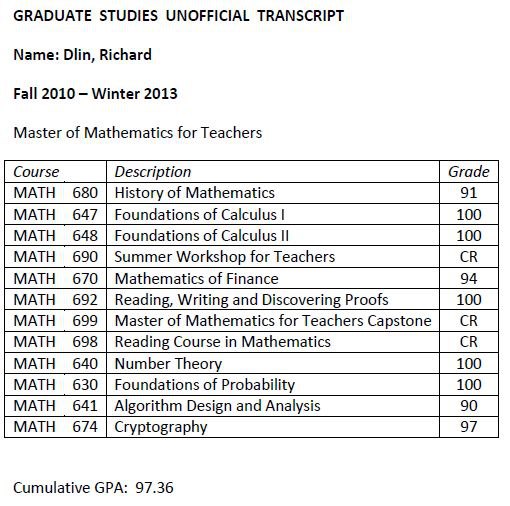
MMT TranscriptHumility aside, my concentration and focus used to be legendary. I could get lost in a process, with intense focus for hours on end. So much so that I would forget to eat or even go to the washroom, until the need for one or both of those became impossible to ignore and I would look at the clock and be shocked at the time. And the things I could do during that time were amazing. It’s how I got through my Masters degree with a GPA of 97%, for example (that and major support from my awesome wife and kids). Lately, my concentration sucks. I find myself looking for distraction only minutes after beginning something. At first, when I noticed this, I blamed my age. It’s no secret that aging can have an impact on brain function. But the truth is I am 48, and there are plenty of people older – even much older – than me who can concentrate on a task for a long period of time with no trouble. On a smartphone, nothing needs concentration, and everything is provided in quick bites. You flit from item to item like a politician moving through a political rally, shaking hands with everyone and meeting nobody. And you can tell yourself that this is behaviour limited to your phone time, but what you miss is that your brain is a learning machine, and it’s learning a behaviour. Your brain wires itself to adapt to your environment, even if that environment is the manufactured barrage of inanity you kill time with on your phone.

Possibly worse, is that we tell ourselves that the phone is a harmless distraction, and we use it at the weirdest times. I’ve used it while watching TV, thinking that surely the TV doesn’t care so no harm done. But while the TV doesn’t care, my brain does. Watching a television show requires focus. Not the same level as calculus mind you – but focus nonetheless. There’s a story unfolding and if you miss something the subsequent bits make less sense. So you are missing an opportunity to focus. To practice what I tell my students is the single most lacking skill in the computer generation: uni-tasking. I have heard many a person brag about their ability to multi-task, which is great, I guess. But smartphones have stolen our ability to focus on one thing for a long time. We can no longer effectively uni-task.

Smartphone Addiction Encourages Mistakes

Yeah, this one took me a while to clue into. I’ve noticed over the past couple of years that I am making more mistakes at things that I should be able to do automatically. Frighteningly, I don’t even notice them when I make them – only once they are pointed out, or long after, do I notice. And when I do notice I have no memory of making the mistake.

Now I hear you say Wait! That’s just a symptom of aging!

Well, yes. It could be. But the thing is, there is a thought groove I find myself in when these things happen – like a road I know I’ve been on because the landmarks are familiar but I can’t quite place it. Then it hit me. Autocorrect. Autocorrect and predictive text. Both of these so-called innovations have made it so that we don’t even have to concentrate on the simple act of typing a text, email, or post. Just type close to what you want and autocorrect will fix it for you. Not always correctly, mind you, but often. So much so that when it gets it wrong we don’t even notice until later, making for some humorous/embarrassing messages getting sent. I actually hated this feature, and turned off autocorrect some time ago, but I kept the predictive text on. And it works so well that I often only have to type the first 1-3 letters of what I want and an entire phrase is suggested to me – correctly. So I select it and don’t check it. And sometimes, my iPhone does the old bait-and-switch on me so that the thing I think I’m selecting changes to something else just before I select it, and I don’t even notice and the wrong thing gets sent.

Like I said before, the brain is a learning machine. And my smartphone addiction has taught my brain that you only have to start a thought to have it completed automatically. And that is what has manifested into these increasingly frequent mistakes. It is NOT age. I can feel it when it happens. It is the same thought groove as typing on my phone.

At Least I Remember When It Wasn’t So

The scariest thought to me is that these things I describe are changes. As in, it wasn’t always so for me. I am actually frightened about the generations that don’t have a comparison to make to a different time. A generation that believes that being able to concentrate on one thing for a long time is an unusual, maybe even useless skill. Or that being able catch every joke in a sitcom is a freakish ability. Or that being able to spell a word correctly on purpose is a worthwhile ability. With respect to the issues I have outlined, I want to go back to the way I was. But for many younger people, this is the way they have always been. There is nothing to go back to.

Quitting May Not Be the Answer

So the fix would seem obvious, wouldn’t it? Just stop. But that’s not realistic, or even really desirable. Many good things come from my smartphone. I have made friends – good friends – who live in different countries from me, and I stay in touch with them using my phone. There are legitimately useful apps, like the medication reminder, the shared grocery list. Or the math puzzle game Euclidea that actually reverses some of the deleterious concentration effects I described above. I use GPS apps all the time and get lost much less often (though sadly, I still manage to get lost sometimes). I listen to so much more music variety than I did in the days when you had to buy records, tapes or CD’s, and it is so much more easy to discover new music now than then. I take a lot of photos with my phone, and some of those are real treasures that I wouldn’t otherwise have. I read some great articles, and have learned a ton of cool things. Chances are super-high you are reading this on a smartphone. I believe these are good things. So I don’t want to quit. And I don’t think anyone has to. We live in a pretty plugged in world, and more and more there are things that are designed to be done on our devices that are actually difficult if not impossible to do otherwise. So modified usage is the key.

Modification Requires Discipline

Or does it? I mean, yeah, it does. Almost always. If you want to modify a behaviour it means breaking a habit, and that is not trivial. You need to be disciplined. And you need to believe that you can do it. Which I think, for many people, is the main obstacle to success. That belief that you can do it. Which leads me to my food addiction:

How I Modified My Eating Behaviour

The first addiction in my life I had to acknowledge was food. Maybe I was genetically doomed to that, or maybe it was my upbringing, but my addiction to food is real either way. It resulted in a max weight of 250 lbs, and an adulthood of gaining-losing-gaining, until my heart attack 3 years ago. The heart attack was actually not caused by my eating, or so the cardiologist says, but rather genetics. My arteries are shaped in a more clog-worthy way than you’d set out to do if you were designing a human from scratch. However there’s no argument that my food addiction wasn’t helping. The heart attack added a new tool to my psyche though – something that’s simultaneously heard and easy to describe: a hard stop. Before the heart attack meals were a negotiation in my head. And I often didn’t come out the winner in the bargain. Now there is no negotiation. I eat clean, all the time. I don’t overeat. I actually can have just one french fry. Truly! French fries are a food I will not allow myself to order or prepare anymore, but on occasion I have had just one from someone else’s meal – even though they were finished and offered me the rest. Just one, for the taste, and I have no desire to eat another. Cardio is now a non-negotiable habit as well. I don’t negotiate whether or not I will do it. I just do.

I am as fit as I’ve ever been and certainly as healthy as I’ve ever been. People often ask me how I did it and I sadly tell them that I wish I could give them the secret, but the secret is I had a heart attack and I don’t want another one.

The picture on the left features my beautiful niece at her first birthday. You may be distracted by her cuteness – I understand. Take your time. But when you are ready, the place to look is my belly protruding under my forearm. The picture on the right is a fun shot I took after a workout a couple of weeks ago. Oh, and by the way – both those photos were taken with my phone.

So. I have managed to find a way to live a healthy life despite a food addiction, even if the way I found was not something I’d wish on anyone. But after all, isn’t it all in my head? This new tool I called the hard stop?

Of course it is. And because it is I believe I can apply that rationale to my phone addiction. I have started to, and will continue to do so.

What I Am Doing to Fix it

I turned off all the features of my phone that try to think for me. Any typos or wrong words I send now are all mine. And there are so much fewer of them now! It takes me longer to compose a message. But it’s worth it.

I will not look at my phone while watching TV. Not even during commercials. Because you can’t force yourself to stop the moment the commercial is over.

If I am in the middle of a legitimate text conversation with someone, I make sure the people in the room with me know it, so they know why I am checked out. And when it is done, I tell them explicitly that I am done and I put my phone away so that they can have my distraction-free attention.

When I sit down to do focus-heavy tasks, like work or drawing, I put my brain in do-not-disturb mode, meaning I don’t check notifications at all, and my phone becomes a music player exclusively. When I do this, I let anyone know who would normally feel like they have 24/7 access to me that I have gone dark. This way if they need to communicate with me they know they need to either do it in person or call. Because as we all know, nobody ever uses their smartphone as a telephone, so when there is an actual call I know I should check to see who it is and probably answer.

It Can Be Done

As they say, no need to throw the baby out with the bath water. You don’t have to quit if you can properly modify. And you can. I believe you don’t need a critical moment to be the catalyst. Just the knowledge that you can do it. And I really, really believe we need to.

I’d love to hear your thoughts and experiences on smartphone addiction, and how it can be addressed. Feel free to share in the comments section.

Thanks for reading,

Rich
