The global COVID-19 pandemic has been a reality long enough now that the emails and texts that start off “in these extraordinary circumstances” or “considering the difficult times”, or “unfortunately, due to the unprecedented situation we find ourselves in” now feel like the opening sentiment is redundant. It has strangely become awkward to know what to say when sending out an email with yet another update on how someone or some institution has been impacted. We get it. And yet … we don’t get it. Because we didn’t sign up for this.
I have always admired and respected people in law enforcement, the armed forces, and perhaps especially firefighters and EMT’s. I remember 9/11, which drove home the point that hardly needed making that when everyone’s instincts are screaming at them to run away, these are people who run toward. And my respect for them stems from the fact that they signed up to do it. Something inside compelled them when they were younger to sign up for a career of running toward the danger. Of being in place when the shit is going down. Of being the person who was standing between the monster and the town, or being the first person the rest of us might see after getting mauled by the monster – doing their best to get us out of the danger and back into the loving arms of uneventfulness. My respect for them is unchanged.
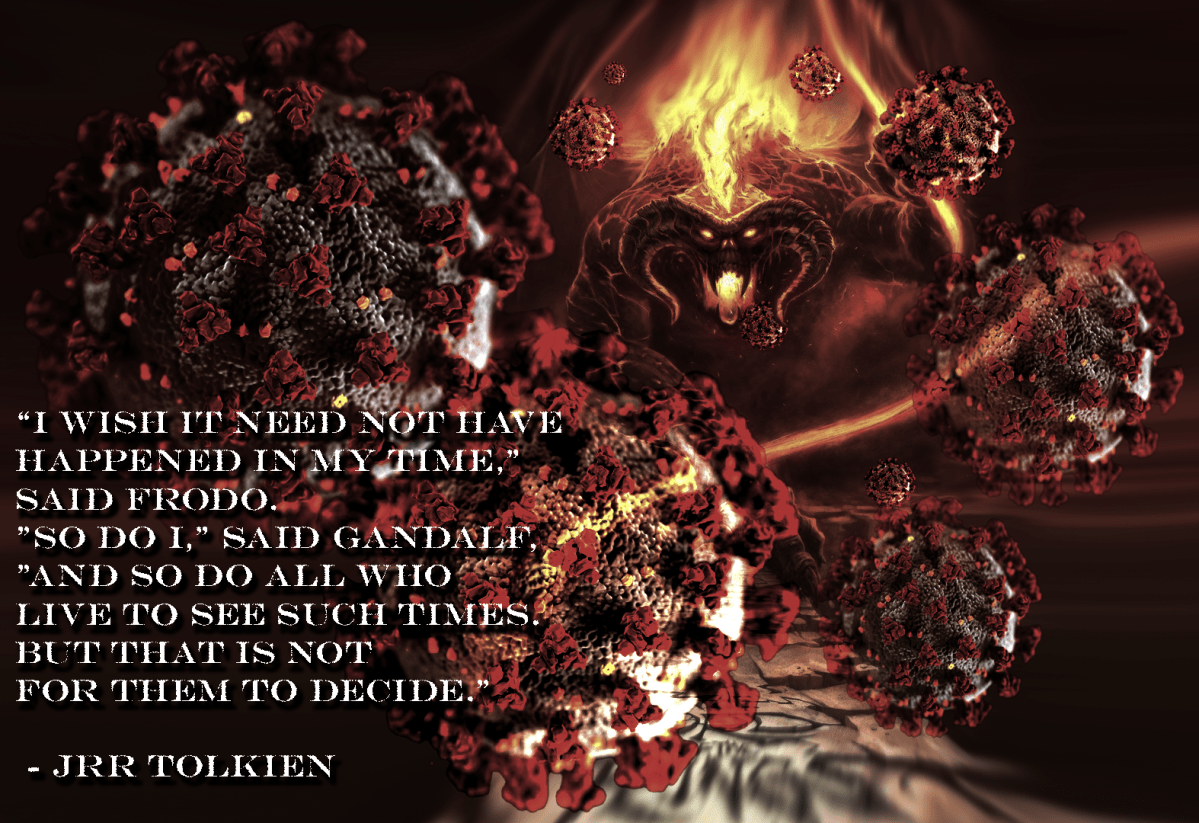
But now we are finding out that some monsters don’t make a frontal assault. Some of them don’t take the path through the Hot Gates, so that Leonidas and his Spartans can know where to stand to get between the armies of Xerxes and the Greek civilians. Sometimes there is no bridge for Gandalf to block, because sometimes the Balrog descends like a toxic snowfall, on everyone at once.
And we didn’t sign up for that.

Grocery store clerks and cashiers, essential workers in office buildings, gas station attendants … they didn’t sign up to have to go out each day and do the exact opposite of what the rest of us have been told to do. Nurses and doctors signed up to treat sick and injured people – but they didn’t sign up to fight for 15+ hours a day, 7 days a week, against an unseen and not fully understood enemy, under-equipped and underfunded. They didn’t sign up to put themselves at risk caring for ICU patients with a highly contagious virus. They didn’t sign up to hold the phone as patients who might never go home FaceTime their families who just cry as they watch their loved one in an induced coma, breathing only thanks to a ventilator.
It is sadly ironic that some of the lowest-paid occupations in our society are now clearly the backbone of it. I find myself more and more troubled by this glaring imbalance. They didn’t sign up to be brave. The didn’t sign up to run toward the trouble. They didn’t sign up to be at the front. And yet.
What we are slowly discovering is that there are no rules for this. There are no precedents. Values and priorities we thought we understood only a month ago have undergone a seismic shift. And still, many people are operating on assumptions out of a lifetime of habit. As a high school teacher I am seeing this acutely through the lens of my colleagues and my students. Some colleagues are very concerned we will not be able to cover all the curriculum. Some students are very concerned about how this will impact their grades. But it seems to me that what this concern is missing is that the entire world is in the same boat. Every grade 12 student in the province of Ontario is not in school. Every graduating student that will attend university next year is going to have major gaps in their knowledge base as compared to previous years. Every single one of them. As for grades, the only time grades ever matter is when they are being compared to the grades of others. Entrance to university or college. Acceptance to a Masters program. Awards and scholarships. I can promise you that when committees are sitting looking at grade transcripts from this time, they will 100% not be wondering what the hell happened in 2020. Nobody knows yet how they will compensate for the complete inscrutability of the transcripts that we generate, but it is certain that there won’t be individual students who managed to live an alternate reality stream where they did not experience the pandemic and the effects it had on curriculum delivery and grading.
I also find it ironic as an educator that for years now we have been saying that we need to prepare our students for a future that we don’t understand, and yet now we find ourselves living a present that we have no frame of reference for. All the rules have changed. Societal norms are in flux. Responsible governments are scrambling to make the best decisions for the present and for the future. We’ve seen politicians completely shed their veneer, humbled into humanity by the pandemic. We’ve seen others double-down on the default political position of obfuscation, redirection, and selling the fantasy. They don’t have a rule book for this, so some are writing a new one, while others are desperately trying to make the old one work. Time will show either way that governments around the world are making many mistakes. But time will also show the wisdom of many of their decisions. It is too soon to be able to tell in each instance which is which. But as I wrote a few years ago, mistakes are just as valuable in the long term as getting things right, because time doesn’t stand still and we are only ever as good as the lessons we learn. Mistakes make excellent teachers for those willing to learn instead of criticize.
Because we didn’t sign up for this, we don’t have a playbook. There is nothing that is time-tested and proven effective. There is nothing you are “supposed” to be doing with your time. There is only what makes sense in the moment. And the biggest thing to understand is that everyone is in the exact same boat. Or to use another metaphor – we are all on the same ride, and the ride has stopped. So when things return to whatever normal will look like, we will all emerge into the same sunlit sky, rubbing our eyes and stretching our arms and legs. Standards and expectations that applied before the pandemic in many cases not be relevant.
Everyone will understand what you went through.
Thanks for reading,
Rich



 Ok. I know that’s been borrowed from AA protocol countless times. Often in jest when not in the context of an actual meeting. But I’m not joking – I am an addict. I have had a few addictions in my life, thankfully not any of the big nasty ones like alcohol or drugs, but some of the ones I’ve had have had negative impact, for certain. The two most prominent are food and smartphones.
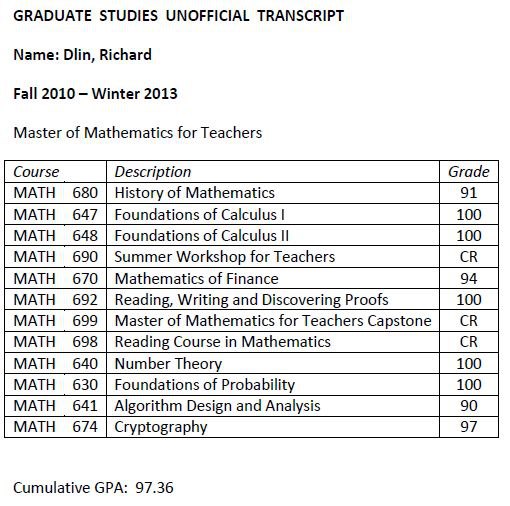 Humility aside, my concentration and focus used to be legendary. I could get lost in a process, with intense focus for hours on end. So much so that I would forget to eat or even go to the washroom, until the need for one or both of those became impossible to ignore and I would look at the clock and be shocked at the time. And the things I could do during that time were amazing. It’s how I got through my Masters degree with a GPA of 97%, for example (that and major support from my awesome wife and kids). Lately, my concentration sucks. I find myself looking for distraction only minutes after beginning something. At first, when I noticed this, I blamed my age. It’s no secret that aging can have an impact on brain function. But the truth is I am 48, and there are plenty of people older – even much older – than me who can concentrate on a task for a long period of time with no trouble. On a smartphone, nothing needs concentration, and everything is provided in quick bites. You flit from item to item like a politician moving through a political rally, shaking hands with everyone and meeting nobody. And you can tell yourself that this is behaviour limited to your phone time, but what you miss is that your brain is a learning machine, and it’s learning a behaviour. Your brain wires itself to adapt to your environment, even if that environment is the manufactured barrage of inanity you kill time with on your phone.





 Experience Has Made Me Rich