Thoughts From a Dance Dad

Lately it seems as though the amount of time I have to write is inversely proportional to the amount of ideas I have to write about. But today’s entry is about something I’ve been thinking about for years: Dance.

Early Years

145-4524_IMG.JPG
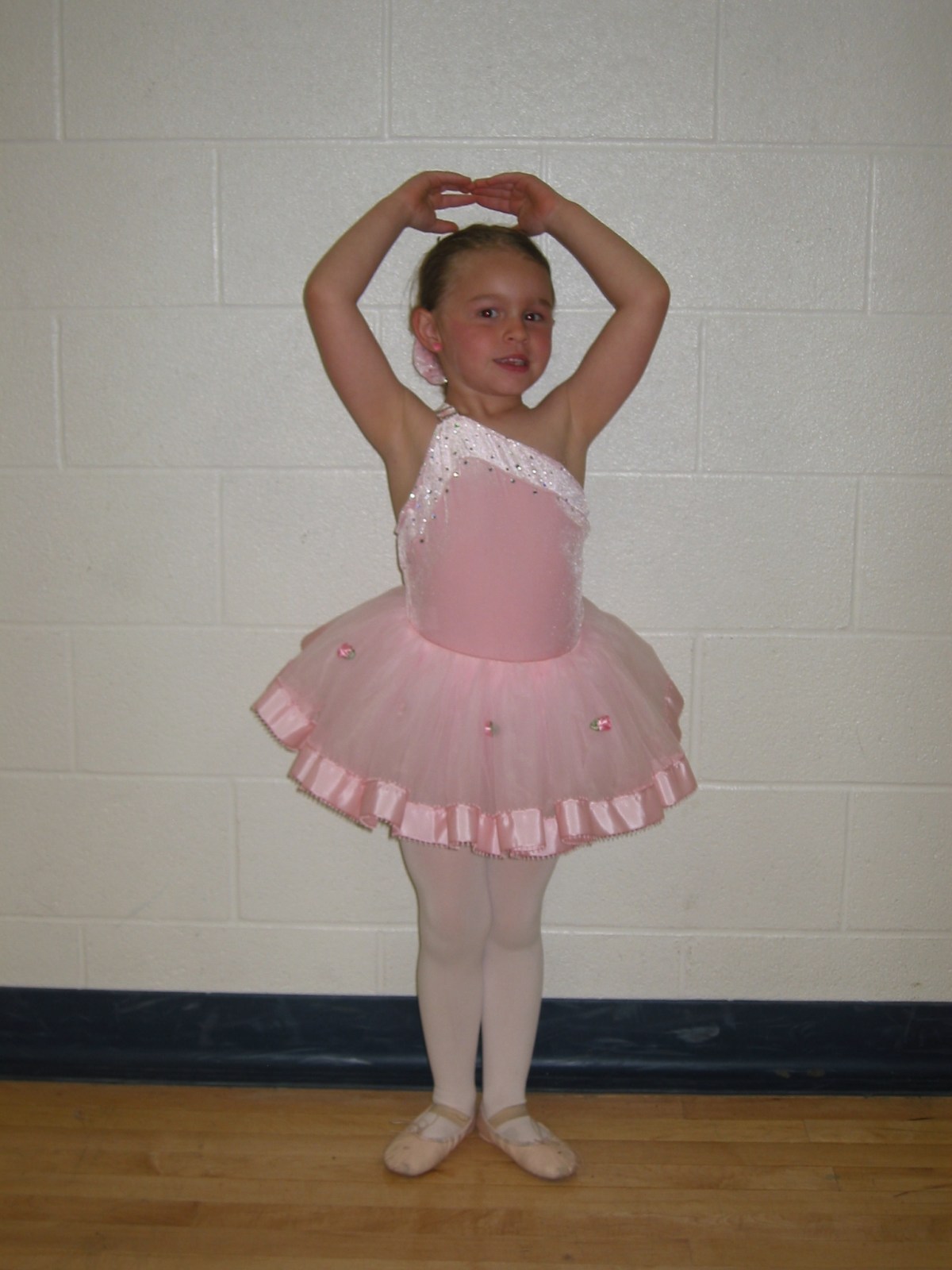
My Little Ballerina (age 5)

My daughter is a competitive dancer. She’s 15, and has been dancing since she was around 3. She’s gone to countless dance camps, workshops, and of course classes. So I have been a dance spectator for about 12 years. Prior to that I knew next to nothing about dance, save for the fact that I have never been any good at it.

At first, dance was pretty much entirely about how cute the kids all looked executing choreography. They got to wear these elaborate costumes and perform for friends and family at recitals. The teachers and teaching assistants are always on stage at the same time as the kids, and the kids essentially never take their eyes off them, mimicking the movements they’ve all spent months in class learning. It’s exceedingly adorable, and naturally every person who comes to watch immediately rushes to them afterwards to tell them how wonderfully they danced. In short, it’s a typical exercise in getting kids involved in an activity that provides some structure around working toward a goal, and then the kids get congratulated on essentially existing for the duration. And it’s awesome.

As the years progressed, we saw less and less boys involved. I won’t attempt to analyze that or comment on why it might be, but political minefield notwithstanding, it is true. This meant that as the dancers grew, it became – for my daughter’s group at least – a girls-only activity.

Emerging Talents
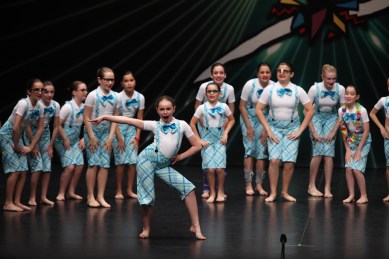
1042Starting around the age of 8 or 9, and lasting for 3-4 years, it starts to become obvious which of the girls are well suited to dance and which are not. This obviousness is not lost on the girls. Dance becomes a micro-society where “Haves” and “Have-Nots” start to identify, and the behaviours that result are what you would expect. In a way it mirrors what is happening at that age in school, but from where I sat it was definitely magnified at dance. These can be pretty difficult years for the girls, and perhaps more so for the parents. As I watched from the sidelines, I always told myself that whether a Have or a Have-Not, there are very valuable lessons to be learned from these dramas, and whether my daughter was receiving or giving grief (it certainly seemed she was receiving a lot more than giving, but nobody ever accused a dad of being impartial), my wife and I always did our best to ground her in reality and look for the long-term life lessons that could be taken. I do think, subjectivity aside, that I can safely say my daughter began to show real talent for dance during this time. I can also say, objectively this time, that she emerged from this phase with an inner-strength and confidence that is astounding. As I watch her navigate the social quagmire of the tenth grade, I am exceedingly proud and awed at how well she manages to stay true to herself and her friends, while gliding above the drama that can consume most kids of that age. She never judges others, and always stays honest in helping her friends deal with whatever the current issue is. In and out of the dance world I have watched her handle victories with honest grace and compassion, and failures with resolute determination. She’s my hero, and I firmly believe we have the “emerging talent” years of the competitive dance program to thank for that.

From Girls to Women
As the girls mature into women, things change at dance in a way that I could never have understood if I were not so immersed in it. This phase is not something I came to understand only as my daughter entered it – the nice thing about being a dance dad is that every recital and dance competition you attend features dancers from all the age groups. So that long before my daughter was in high school I have been observing this stage of a dancer’s development. I also have the added advantage of being a high school teacher, and so for my entire career have had the pleasure of seeing how dancers take the lessons from dance into seemingly unrelated arenas, like a math classroom, which really is my domain. Having a daughter in dance always made me pay attention to how older dancers behaved, kind of as a way of glimpsing my daughter’s future. Here are some observations I’ve made over the years, and observations I have now had the pleasure of seeing manifest in my own daughter.

Dance is a Language
This is not metaphor. Dance actually is a language. It took me some time to fully appreciate that. Because of my daughter’s involvement in dance, our family has been marisa-dancewatching So You Think You Can Dance since season 2. It’s a great show to be sure, but I admit at first I was too absorbed in marveling at the physicality of it to understand what it communicates, despite the fact that the judges on the show really do a great job emphasizing this (I always assumed they were saying it metaphorically). But like a child that learns to speak simply from hearing the spoken word and contextually absorbing meaning from the sound, I began to absorb meaning from the movement. The first thing I realized was that unlike languages that use words, dance doesn’t translate to any other language, and communicates things which can’t be communicated any other way, with the possible exceptions of fine art, or poetry. Really good fine art will enthrall and speak to the viewer through infinite contemplation of something static. Really good poetry succeeds at using words which individually can be quite linear, by combining them in a way to create depth and consequently say something the language the poem is written in was not necessarily designed to say. Really good dance? A different thing entirely. It speaks to our humanity on multiple levels, and the fluidity of it allows the choreographer/dancer to tell us stories no written word could approach.

Words are discrete, and a picture is static. But motion is a continuous medium, and the very continuity of it results in an infinity of expression within a finite frame of time and space. It has been said that dance is poetry in motion, but I honestly have come to see it in the reverse. Poetry is dance stood still. I can’t find words to describe this any better, because words will fail here. If you want to know what I mean, watch dancers. And in the same way that second and third languages improve thought processes and imagination, so does dance – but it does so in a way that is magnified a thousandfold because of its unique method of delivery, and because of the world of thought and emotion it opens up for communication. It also is unique in that you don’t have to be able to speak it to understand it. You only have to watch.

Dancers Make the Best Actors
Because of my passion for theatre, I have had the immense pleasure of being both actor and director in various musicals. And here is what I’ve noticed – not all great actors are dancers, but all dancers are definitely great actors. To me there is no mystery as to why this is. Many actors focus on the words they’re saying or singing, trying to pour all of the character they’re portraying into the delivery of the lines or lyrics. Physicality is often an afterthought, or a simple by-product of the emotion they are feeling about the performance. For dancers it’s entirely different. Because of their fluency in dance, they are simultaneously vocalizing and dancing the performance. By dancing I don’t mean the choreography that often accompanies musical numbers, although naturally a dancer excels there. Rather I mean that they are speaking to us in two languages simultaneously. And even those of us not able to communicate with dance can still understand it. So I have often found myself thinking of a dancer “It’s not a je ne sais quois she has. It’s a je sais qu’elle est une danceuse” (yes, you have to speak some french for that one  😉 ).

Dance is Empowering
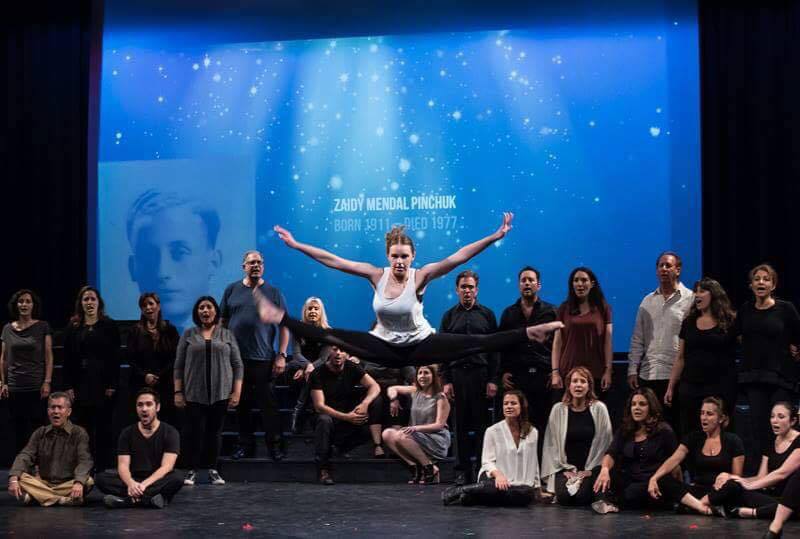
Okay. So obviously dance results in physical fitness. You can always spot a dancer by their muscle tone, posture and grace in simple movement. The importance of this can’t be underplayed. But the kind of empowerment I’m talking about here is more than that. I flying-marisaremember once at a dance recital there was a senior acro small group number about to start (see what I did there – Dance Dad knows the terminology). It was clear from the opening positions that one of the dancers was going to execute a crazy trick to start the dance. Before the music started there were hoots and hollers from the wings and from the audience, and one dancer’s voice from the wings rang out with “You GO girl!”. I was momentarily taken aback. I think maybe I had just read an article or watched a show where that phrase was called into question as demeaning to women. And then I looked around. The stage and venue was dense with strong, confident young women, certain of themselves and certain of their power. And the dancer who called it out numbered among them. I couldn’t see anything demeaning at that point about what she had said, but on a deeper level I realized just what dance had done for these kids. It showed them what inner strength, determination and dedication could do. And so naturally I began to think about the dancers I’ve taught in my math classroom and I had this moment of revelation. It is exactly that quality that has always made them stand out to me in that setting. Not that they all excel in math, because not all kids do. But that regardless of their abilities in math, there is always an inner strength and peace that says “I know who I am, I know what I can do, and I know how to commit to improving.” Where many students in high school still need the explicit motivation that our culture seems to thrive on too often, the dancers have internalized their motivation in the best way. I can’t say enough how important that is for success in life.
unsung-marisa

Thanks for reading,

Rich

The Arts – Polish For the Soul

First off, a quick apology to anyone who follows me for my lack of blog posts. I have been writing them – but they are all sitting in my draft folder. However this one is special.

So this past weekend I went to New York City with my son for a quick trip. We had tickets to see the Sunday matinee show of Hamilton, and at the last minute when we were there we also decided to get tickets to see Fiddler on the Roof. I could probably write a small novel on how awesome it was to spend a weekend in NYC with my almost 19-year old son, but that’s not what this is about.

This is about Art.

In my 47 years on this planet I have learned one thing about humans – we tarnish. Or more specifically, our souls tarnish. It’s not a bad thing – in sterling silver, tarnish is just a natural result of exposure to air. It does nothing to diminish the silver underneath, nor does it change the essence of the silver in any way. What it does is make the shining core progressively less visible to the world. With tarnished silver there are two ways to reveal the shine – you can score the surface where the tarnish is and reveal shining silver underneath, or you can gently polish the tarnish for the same result. Scoring the surface leaves scars, but does not affect the shine. Polishing leaves no scars.

When it comes to humans, we are all born shiny. Like new silver, our souls gleam and light the world around us. You don’t have to be a philosopher to know this – just watch the faces of all the adults the next time you see a little girl on the subway singing made up lyrics about the ads on the walls. Her soul is bright and shiny and we love it. But as we get older our exposure to life adds layers of tarnish. I get that this sounds negative but it really is not. It’s natural. Our light does not dim – it just becomes more hidden. Personally, I’ve seen three things that can bring it out again.

The first is grief. Live long enough and you will get scored by grief – it’s inevitable. It hurts like hell. But something miraculous also occurs. Grief cuts through the tarnish. In the terrible grasp of grief, people return to that vulnerable state of openness and childlike trust. It doesn’t make it hurt less, but it does remind us how beautiful our soul is. It leaves us scarred, but not less wonderful. It also leaves a memory of that vulnerability that was our souls shining where the tarnish was removed. It’s not a scary vulnerability but a precious one. However the tarnish returns, and nobody should ever be subjected to grief as a means of therapy.

The second is celebration. Weddings in particular are where I have seen peoples’ souls shine. Listen to wedding speeches from people who are truly in love – and even the speeches from their families and friends, and you’ll know what I mean.

The third, and to me the most significant in that it can be called upon at will, is art. I really do mean art in all forms (and as an aside, check out my other website where I feature my own drawings: Studio Dlin), but my focus here will be on theatre, and specifically on the shows my son and I saw this past weekend.

Saturday night was Fiddler on the Roof. This is a show I know very, very well. I actually have had the pleasure of performing the role of Tevye in it, and I love the show dearly. Anyone familiar with the show will know that Act 1 is loaded with warmth and humour, right up until the final scene. Act 2 is heavy, with not nearly as much laughter and with a lot of emotional, even painful moments. As you’d expect from Broadway, this cast and the production were outstanding. Because I know the play so well, and because I played Tevye, I was actually simultaneously performing the show in my head as it unfolded. I found myself in the story.

Tevye loves his daughters deeply and tenderly. I loved them too. Tevye loves his people and his town. I loved them too. Tevye suffers poverty with a smile and an honesty that is undeniably human, and I did too. In Matchmaker, his daughters discover how terrified they are of being committed for life to a marriage someone else chooses. I was terrified too. The townspeople suffer at the hands of an oppressive Tzar, and I suffered too. Tevye and his daughter Hodel say goodbye forever when she decides she must go live in Siberia when Perchik is arrested, and I was both father and daughter in that moment. Tevye then must say a much harsher goodbye to his daughter Chava when she decides to marry out of the faith, and his traditions force him (and to a slightly lesser extent his wife Golde) to treat Chava as dead. In that moment I was father, daughter, wife and husband. When all the Jews are forced to leave Anatevka at the end of Act 2, I was every one of them – even the Russian constable who had to inform them of the edict. I laughed, cried, danced in my seat and sang along (in my head!).

Sunday afternoon came and it was time for Hamilton. My son and I have both listened to the soundtrack many, many times. Being younger and possessed of both a greater quantity and quality of brain cells, my son knows the lyrics practically by heart. I also know them very well. Not by rote, like with Fiddler, but well enough to sing along and certainly well enough that I know the whole story as told in the play. From the moment the lights went down to the moment it was time to leave I was once again living the story. Just as it was with Fiddler, every scene placed me firmly in the hearts of the characters. When Hamilton’s mother died holding him I died with her, and I survived with him. When Hamilton, Laurens, Mulligan and Lafayette are planning their glory, so was I. When Eliza was anxiously watching Alexander as he is trying to win over her father, I was all three sisters, I was Hamilton and I was Philip Schuyler. When Angelica told the story of falling for Alexander right before introducing him to her sister Eliza, I was all three of them. When Burr presented himself to Washington just before Hamilton arrived in the office I was Burr doing what he needed to do to get ahead, Washington carrying the burden of leadership and Hamilton with his burning desire for glory, not recognizing the real power that set him apart. I was Burr dismissed by Washington and Hamilton not knowing what Washington really wanted him for, and I was Washington seeing it all from the lens of maturity and wisdom and also knowing there’s no way to explain it to either Hamilton or Burr, and knowing that only life would teach them. I could go on.

And I will.

I was Samuel Seabury trying to defend a way of life I didn’t understand was an illusion, getting bullied by someone with more clarity and intelligence but not understanding what I was wrong about. I was King George, unable to see or comprehend a world outside the carefully constructed and preserved cocoon of royal privilege. I was an American soldier fighting for independence. I was Hercules Mulligan and I got knocked down and got the fuck back up again. I was a redcoat in a war decreed by my king, fighting across the sea away from my home. Fighting against people who were fighting for their home. I was Charles Lee, in over his head and not comprehending the stakes – only the glory of my title. I was the British soldier finally given permission by a superior officer to wave the white flag, and doing so with a weariness that permeated to my core.

I was Philip Hamilton showing off nervously for his imposing father, while honouring the lessons of his caring mother, and at the same time I was the father and the mother. I was Jefferson coming home, and Madison celebrating the return and the support of his like-minded friend. I agreed with Jefferson AND Hamilton, and felt both their passion. I was Washington knowing I had to step down, even if I knew that what was coming was not what I would have done. I was Maria Reynolds, so beaten down by cruelty that my principles were skewed to a place where any momentary relief from the reality of my life justified any means to get it. I was the asshole James Reynolds, and it sucked. I was Eliza realizing she’d been betrayed, and that sucked more.

I was George Eaker, cocky and arrogant, and Phillip Hamilton, the child-man. I was the shooter and the victim. And then I was the mother and the father, when my heart was thrown into a wood chipper as we watched Phillip die. I somehow continued to live, as they did. I was Burr campaigning, I was Hamilton supporting an enemy with principles over a friend without. I was Burr driven by frustration and rage, and I was Hamilton ultimately admitting defeat to the price his family had paid for his drive. I was Eliza for 50 years after that.

I was all of this and more, and all in two doses of 2 hours and 45 minutes (Hamilton and Fiddler have the same running time). In those moments my soul was shining thanks to the gentle polish of the performances, and it still is. And as I looked around the theatre after Hamilton it struck me. Hundreds of people had experienced the same thing. The same tarnished souls that had entered the theatre were all shining brightly as they left. The building glowed with it.

Now of course, just as sterling silver does, we will all tarnish again. But here is the beauty of art, and the point of this blog – the polish is always there. You just need to use it. Celebrate the arts. Partake. They are the real expression of our souls.

Thanks for reading,

Rich

On the One Year Anniversary of my Heart Attack

So August 26th of this year marked the one year anniversary of my heart attack. I actually haven’t written a blog since the one I wrote about that day. That’s not as significant as it might sound – I have rough drafts for 3 different ones that I started but I’ve been busy with other things and haven’t devoted as much time to writing as I’d like (something I regret quite a bit). But for the anniversary of H-Day I thought it would be good to write an update on what has happened this past year. I don’t think a chronological narrative would make much sense, and besides, I don’t have that great a memory. So I’ll go with more of a stream of consciousness approach.

As you may know I am a high school math teacher. The heart attack happened exactly one week before the start of the 2014-2015 school year. Although many people couldn’t understand how or why I did it, I actually worked right from the first day of school. I certainly could have taken some more time to recover, but I didn’t feel I needed it that badly and the doctor said that if my job didn’t require heavy lifting and I felt okay there was no reason not to work. My reasoning for starting was that it was easier for everyone involved – students wouldn’t have to adjust to a new teacher twice, the school wouldn’t have to scramble to find someone to cover my classes and my colleagues wouldn’t have to worry about teaching more than their own course load. Now, almost a year later, I can say that the decision to start right away was neither good nor bad. If I had waited things would have been just as fine as if I had not. It’s funny how so many decisions in life seem important when they really are trivial. I took things easy at first and let my body tell me when I could ramp up, always erring on the side of caution. For example I took the elevator instead of the stairs for a couple of weeks, and kept my boardwork lower on the board (so as not to raise my right arm too high after the angio) for about a week.

One thing that I learned from my first follow-up with the cardiologist was that I have no “modifiable risk factors” for heart attack. Basically it’s good old genetics. I don’t drink or smoke. I have low cholesterol and low blood pressure. At the time of the heart attack I was overweight but by no means obese. I was keeping fit with heavy weights and regular though limited cardio. This was disturbing news – I mean it would be nice if I could just stop something I was doing and know I was preventing another heart attack, but as the cardiologist said, at least now I know. I had three partially and one fully blocked arteries, and except for one of the partials they were all stented. The one that was not stented is very small and doesn’t supply a large area, so that other arteries nearby can cover what it doesn’t manage. I am on a cholesterol medication that has been shown to prevent plaque buildup in arteries and even to slightly reduce existing plaque. I am hyper-aware of my heart so if anything does deteriorate I will be on it right away. In the meantime I decided to do everything I could do. As soon as I got the green light to resume exercising I began a cardio regimen of 45 minutes, 5 times per week. As of this moment, I have averaged exactly that. I say averaged because there were three weeks where I didn’t manage to get all 5 sessions in, but always compensated in succeeding weeks by adding sessions. Three different vacations didn’t keep me from my cardio. Some people tell me “Hey, you’re on vacation, give yourself a break.” My response is my heart doesn’t know I’m on vacation, there is no such thing as a break.

I also cleaned up my diet. Not that it was that terribly unclean to begin with. But I did eat a lot of red meat (3-4 times per week, sometimes more), and 2-3 times per week allowed myself cheat meals like KFC or Burger King, or just really decadent meals at restaurants. Now I eat only lean red meat, and only 1-2 times every month. I’d say over the past year I’ve probably had red meat about 15 times. My protein mainly comes from white meat chicken, fish, and some vegetarian sources like beans, quinoa, and nuts or nut butters. I eat very little fat, and almost no saturated fat. What fats I do eat come from the fish or chicken, or light salad dressing, which I use extremely sparingly. I don’t measure my food, but I never eat until I am stuffed. That’s also a change from before. For this entire year I have not felt stuffed even once. And I still eat a lot – probably 7-8 times each day. A lot of fruits, berries, vegetables and nuts fill out my diet.

So what the diet and cardio have done is resulted in fat loss. I spent my entire adult life struggling with fat loss – often successfully but not always. Each time the goal was fat loss. Now the goal is not that at all. The cardio and diet are to keep my heart healthy. The fat loss is a side effect, albeit a pleasant one. When I had the heart attack I weighed 225 lbs (down from an all time high of 245). Because I am a hobby bodybuilder that’s not as heavy as it sounds, but I was certainly carrying too much fat by an obvious margin. My weight this this morning was 189. I won’t lie and say that I’m ambivalent about that – I am overjoyed. But it wasn’t and isn’t the goal.

Speaking of exercise I also resumed lifting weights about 6 weeks after H-Day. This was with the doctor’s blessing. At first I kept things very light and let my body tell me when it was ok to go heavier, again always erring on the side of caution. I don’t remember the exact timeline but I’d say after about 3 months I was more or less back to pre-heart attack form. The weights and the fat loss are visually pleasing to me. Here are a few vanity photos of the impact this has had on my look.

IMG_0160 IMG_0683

IMG_0078  IMG_0159

I’d actually like to include a photo I took when I was 245 lbs but my computer is currently deciding I’m not allowed to look through old photos – thanks Windows 10.

The great news is that after the heart attack the cardiologist who saw me at the hospital said my heart was damaged (on a scale of 1 – 4 where 1 is the best, mine was a 2), but on my six-month follow up visit I had managed to return it to a level 1. The words of the cardiologist were “Except for the presence of the stents you have the heart of a healthy, athletic adult male with no sign of trauma.” And that, ladies and gentlemen, mattered profoundly more to me than how I look, although that is what people see.

Whenever you lose a lot of weight, or otherwise significantly change your look to something more aesthetic, people always want to know how you did it. The truth is I did it by having a heart attack. That flicked a switch in my mind that had never been flicked before. I no longer have a choice about eating well and exercising, which can read differently than I mean it. What I mean to say is that I know all to well what a struggle it is to have to make good decisions about healthy eating and exercise. To choose not to have a sundae and opt instead for the fruit salad. For me, now, the sundae is not a choice. Nobody is forcing me not to have it – it has been removed from the list of options by something outside my control. It’s actually pretty liberating. So my answer when people ask how I did it is to say “Well, step 1 is … you don’t want to do step 1.” Because Step 1 was have a heart attack. I didn’t decide to start looking better and then do something about it. I had a heart attack and this is how I am doing my best to prevent a repeat. I will say that I have had the odd dessert here and there. But each time I have done so it’s literally been a tiny forkful (as in just the tip of the fork) so I could taste it. The forkful concept would have seemed ridiculous to me a year ago. Now it is legitimately enough. I don’t have the forkful and then look longingly at the rest, wishing I could have more. The forkful does what I needed – it gives me the taste and that is enough. Once again this is not a choice I am making, or a philosophy I am forcing myself to embrace. It just is the way my brain works now – I didn’t deliberately activate it. If I did I would write a book about how. Another example is that there have been 4 times (no, I’m not counting I just remember them) when I have eaten one french fry at a meal. Because I wanted the taste.

Emotionally/psychologically it would be a lie to say I have not been affected. The day I had the heart attack one of the reasons I didn’t call an ambulance as soon as I should have is because I didn’t want to scare the kids. There’s no way around the fact that when your dad has a heart attack it’s scary. Same goes for my wife. The very last thing I want to do is scare them or have them worry. That said I am now hyper-aware of what is going on in my body, and especially my chest. And guess what? Chest pain happens, and it’s not generally a heart attack. Gas happens (especially because it is a side effect of some of the medication I am on). The pain can cause anxiety. Anxiety can cause chest pain. It’s a hilarity-filled ride. I can’t specifically recall how the heart attack itself felt – I just know it hurt but was not as intense as you’d think. I feel as though if it were happening again I would be sure. But I’m not sure if that’s true. So there are days when I find myself worrying. However with the cardio regimen I’m on I can always reassure myself that I wouldn’t be able to do 45 minutes of intense cardio without accompanying intense pain if I was actually having another heart attack.

On that note, when I started the cardio after the heart attack I was keeping my pulse rate in the 120’s, although my doctor did say I would be able to push it higher as I healed. As of today I usually use my elliptical machine (I have a gym in my basement although it has evolved since that blog about it), and the heart rate monitor I bought shows I’m keeping my heart rate in the 140-150 zone, which I made sure was ok with the cardiologist. Speaking of heart rate, I also take my blood pressure daily, and it stays in the 115/75 zone, with a resting heart rate of around 60 bpm.

One thing I have found recently (as in, the last 5 weeks or so) is that drawing is great therapy. It is extremely calming and does a great job of centering my thoughts. I highly recommend it. Another thing I’d have said if you’d asked me a year ago was that I can’t draw for beans. I never really believed I had any talent in that regard. But I have watched hours of YouTube tutorials and have been drawing every day. The therapeutic aspect can’t be overstated. It turns out when you practice something you also improve. Here is one of my earliest attempts at a portrait and one of my most recent ones. I’m no pro and may never be one, but the improvement is real and that’s only about a month. Therapeutic, fun, and inexpensive – I highly recommend it.

IMG_0442  IMG_1164

Wow. Ok this really has been stream of consciousness style. My writing is usually more organized than that. Ah well. This one wasn’t about writing, more about an anniversary summary. I admit I didn’t proofread that carefully either – forgive the errors. I am always happy to answer questions or offer assistance if I can. Leave me a comment and I will respond.

Thanks for reading,

Rich

Grief vs. Misery

During a conversation with a friend today I had occasion to think about the grief and misery I felt when my mother passed away almost five years ago, and also when the very young son of a close friend of mine passed away about two years before that. Grief. Misery. Two highly emotional words. I never really thought about them separately before, but they are quite different.

In both experiences the grief of the loss was immediate and profound. And in both cases the misery was painfully intense. In my conversation today I realized how separate these two emotions are when it comes to loss. Grief is a natural emotion stemming from losing someone you love. It’s that feeling of having something critical to your existence removed, violently and without your permission. It’s a feeling that combines powerlessness, loss and anger. It’s natural and even essential for continued survival. It paves the way for acceptance and growth.

When I think of my mother these days, I think of her beautiful soul, her love, and all that she gave me that makes me who I am now, and who I am now is someone I like. I owe her that, and my grief over her loss provided an intensification of my understanding of that.

When I think of my friend’s son, I remember how happy he was, how much joy he brought with him into a room, and the way he played with my kids when he visited from out of town, as if they’d been friends forever. I remember the way his passing brought so many people together – people who unquestioningly put aside any issues they may have had with each other so that they could be there to support the family and show that in times of extreme despair there is a community whose arms you can fall into when tragedy buckles your knees. To him I owe my ability to see past the petty sheen of casual interaction through to the deeper beauty of humanity. My grief over his loss brought me there.

Both losses still make me sad. That does not make me angry. I accept the sadness as part of my understanding of myself and others around me. The sadness is completely intertwined with my gratitude for having known them. When it surfaces, I feel the gratitude and joy right there with the sadness and I smile. The emotions coexist, as they should.

But then there’s misery. Misery doesn’t teach you anything and it doesn’t help you grow. Misery is a manifestation of your desire to punish yourself as a way of dealing with grief. When you lose someone, your helplessness can overwhelm you. It makes you want to hurt yourself as punishment, and misery is the device your brain will use to that purpose. When you let your grief bring misery, especially prolonged misery, what you are doing is enabling a self-induced torture to atone for your inability to recover the loss, and/or for your guilt at survival. Because you can neither bring a lost loved one back, nor justify emotionally your survival over theirs, you invoke misery as a way of evening the cosmic scale. But it’s a false need and it blocks your grief. Your loved one does not want you to suffer the misery. They want you to absorb their legacy and use it to be bigger and better than you were.

So accept your grief and let it wash over you, but resist the temptation to fall into misery. Nobody can control whether an emotion surfaces or not, but you can use your rational brain to evaluate the source. Experience the grief, and it will pass into something more. Reject the misery.

Thanks for reading,

Rich

Choose Your Memories

Short blog today based on a conversation I had recently.

I was talking to a graduating student about how he is going to choose a university. He has been accepted into his two top choices and he doesn’t know how he will decide which one to attend. One university is more widely recognized but would mean moving far from home, where none of his friends will go, and has a more difficult program. The other university is closer to home and has a slightly easier program. Both offer the same degree. After discussing that this was a nice problem to have, I gave him the advice I always give myself. Choose your memories.

Choose your memories

The simple truth is that all you are is your memories. The present is a fleeting instant, and the future is unknowable, so your whole life experience – and how you view yourself – is based on your memories of the past. In fact, there is an interesting perspective that points out that since it takes a small amount of time to process what your senses are perceiving, our “present” is in fact already past, which is pretty weird to think about. But that aside, too often people think about a choice like the one my student must make in terms of how the choice will affect their future. The truth is it’s much better to think about how it will affect your past. I asked him which memory he wants.

Which memory do you want?

He didn’t know what I meant by that. I said, picture yourself 10 years down the road. Right now I know that whichever university you attend you will finish the program. So 10 years from now, looking back at your decision, which one will you want to be glad you made? Who would you rather be? The dude with the memory of university A or the one with the memory of university B?

Choices are an opportunity to build the memory you want, which ultimately means to build the person you want. In this way they are very exciting. Every choice is your chance to be more awesome. Take control of your character and choose the memories you’ll be glad to have, so that you can be the person you want to be.

Thanks for reading,

Rich

On Excellence

Yesterday I was having a conversation with a few of my graduating students about their post-secondary plans. It came up that many students are making choices about which schools to attend and which courses to take based on how easy they think it will be to get high grades, so that they have a better chance of getting into programs like medical school. This is not something I was surprised to hear, as I’ve heard it many times. There are schools in our province that have the reputation for being “hard” and those that are reputed to be easy. Go to an easy school, get high grades, then coast into med school.

My question has always been “Ok, and then what?”

The answer?

“Then I’ll be a doctor.”

That’s when I always want to know what kind of doctor they plan to be. I don’t mean what area of medicine – I mean what level of competence. Very very few students say they want to be mediocre. They all plan on being excellent. I can’t help but wonder how they intend to make that true. I have questions.

What is the path to true excellence? Is it an easy one? Is it possible to simply do whatever it takes to get there as easily and quickly as possible, and then once there reap the rewards? Many think so, but it’s not true.

The path to excellence does not exist. Excellence is not a place you go. Excellence is a mode of travel.

So while there may be no path to excellence, there is a path of excellence. There is also the easy path, and they are very much not the same journey. If you want to be excellent – if you want to live on that path, then you need to work at it. It’s hard, and there are way more people choosing the easy path, but excellence is the most rewarding path there is. Yet so many people spend so much effort trying to look excellent instead of actually working to be excellent. And this is a source of great stress. When everyone around you appears to be perfect, and you know you are not, it can make you crazy. So students do what they can to appear perfect. Taking easy courses, engaging in academic dishonesty (that’s modern speak for cheating for you old-fashioned folk out there) and essentially making diligence and discipline the last resort.

My students say, “But if I take harder courses I’ll get lower marks and I won’t get into med school.”

I say, ‘Not true! Take hard courses and get high marks! It can be done. There are people doing it. Be one of those people. Be the person everyone is afraid they have to compete with instead of the person taking easy courses to compete.”

If you choose to take the easy path to get where you want to go, then once you think you’ve made it you will discover that there’s no way to leap the chasm to the path of excellence. You will be a walking fraud.

On the other hand, if you dedicate every step to being excellent then when you become a doctor (or whatever else it is that you want to be), you will be an amazing one. Having dedicated yourself to the path of excellence you won’t have to pretend to be excellent, because you will be the paradigm of it.

My message is simple. If you want to look excellent, then be excellent. Maintaining a shell of excellence draped over a mediocre core will erode your spirit. Be bulletproof. Don’t look excellent. Be excellent. It’s way less stressful.

Thanks for reading,

Rich

The Death of the Mistake

(Disclaimer: NOT ALL PARENTS are guilty of what I describe in this blog, so please don’t take it personally. But many are. Far too many.)

I’ve made a lot of mistakes in my life. I imagine you have too. Some of mine are pretty indelible for me.

Like the time my friend and I were playing with fire (literally) and almost burned down a hotel. We were scared to death and actually grateful we got caught.

Like the time I decided I could get through that intersection before the car coming from the left got there. Result? One totaled car that wasn’t even mine. It was my girlfriend’s car.

Like the time I thought I could get away without studying for my final exam in STAT 331 and still scrape a credit in the course. I earned a 42. I asked the prof to remark the exam which he did. The mark went down.

I didn’t like any of these or the countless others when they happened. Actually they felt pretty miserable. Yet each one has had an impact on decisions I made later in life and each one of those failures thus resulted in bigger successes. This is not a revolutionary concept. The phrase “we learn from our mistakes” is not new. But have you ever considered exactly how true it is? We aren’t born with an abundance of knowledge. In fact we are born with almost none. We know how to do things like breathe and cry and fill diapers, but we can’t even control those actions much. At first, all the knowledge we accrue comes from our innate curiosity and willingness to take risks. What’s funny is that as babies we don’t even know we are risking anything. We’re just really curious. Watch all the stuff a baby is willing to put in his mouth. You’ll know exactly what I mean. So babies try things and sometimes the result is pleasant or satisfying and other times its not. Each experience whether success or failure goes into the data bank and both guides subsequent experiments and imbues us with confidence regarding our ability to reproduce successes. In this way it is completely correct to categorize both “success” and “failure” as positive outcomes. And yet we have attached so much negativity to the word failure that it has become a thing to be reviled and feared … avoided at all costs. Which is a true tragedy, because success in the absence of failure is yin without yang.

As time passes the culture we grow up in imposes a formalized education, mainly because there is value placed on certain nuggets of knowledge. This happens in the form of school. And that’s where I come in.

Sort of. I teach high school so I guess I come in about 10 years later. After 10 years of a system which has sadly killed the mistake. Kids are no longer encouraged or allowed to experiment. They have to “get it right” the first time. Many parents spend insane amounts of energy making sure their children never experience failure, defeat or mistakes. A friend of mine calls this phenomenon “the snowplow parenting” model. The parents walk ahead of the child, plowing all obstacles out of the way, frantically making sure that no failure is ever experienced. As the child grows and the potential obstacles increase, parents run themselves ragged continuing to pave a smooth way. The effect this has on the kids is incredibly frightening. The child grows up not ever really experiencing a failure, but watching parents become more and more neurotic making sure this “failure monster” never has a chance to get near their kid. It’s a doubly-bad edged sword. First, no failure is ever experienced so there is no chance for the best kind of learning and second, the children pick up on this deep fear of failure and when they find themselves faced with the potential for a mistake they freeze in terror at the possibility. In short, they are simply not equipped to deal with anything but a smooth road, and lack the understanding and confidence that comes from having failed.

So what I see in my math class is kids who are petrified of assessment. I have seen kids cry when they earn a mark in the 90’s on a test. Worse, I’ve seen kids with marks in the 90’s crying when they come in to write a test because of how afraid they are that they might make a mistake. And I’ve had to defend marks to parents who insist to me not that their child earned a higher mark, but that their child needs the higher mark. In grade 9. A grade that no university or college even remotely cares about. A grade for which no scholarships are awarded. Yet the child needs the higher mark. Lest they experience failure.

This phenomenon may actually be the single biggest threat to our culture. Thanks to Snowplow Parents we are raising a generation of kids who have never had a chance to experiment and fail. Never a chance to pursue curiosity, which is the spark for innovation. So what we get is anxiety-ridden underperformers with huge self-esteem issues, fostered by parents who have made it clear that the child is not capable of fending for themselves and thus needs the parents’ involvement every step of the way.

Parents, please. Take a step back. Watch them do it themselves. Watch them fail and celebrate the failure. Mistakes are critical for evolution. Let’s bring them back. Let’s start the Mistake Revival.

Thanks for reading,

Rich

Cell Phones and Independence

The other day my wife and I were doing some grocery shopping when her phone rang.

Side note: Before I continue with my post, I had to stop and read that first sentence over again. Read it again yourself. Now if you’re old enough, imagine it was 1988 and read it again. In 1988 language that sentence is pretty much a total non-sequitur. Today it is perfectly sensible. Funny how time-dependent the reasonableness of some assertions are.

Ok. So I was talking about my wife’s phone. She picked it up and saw that the call was coming from home. Conclusion – it’s one of the kids. She answered it of course. You don’t ignore calls from your kids who are home alone. Right? It was our 11-year old daughter on the phone. She was calling because our 15-year old son was on his computer Skyping (a verb that didn’t exist in 1988) with a friend and was unwilling to help her get something down from a tall shelf. He’s 6 feet tall, she’s 5’4 or so. In our house things on tall shelves are retrieved using my son or myself (I’m 5’11). In her mind, he was failing to uphold a sacred duty and as such, she was unable to continue with whatever plan she had that required the thing on the tall shelf. Crisis.

While my wife was dealing with the situation, I pulled out my phone to check Facebook. Naturally. I mean, you don’t just check Facebook while you’re on a grocery date with your wife but if she’s otherwise occupied go ahead, right? Of course. Everyone knows this. It’s smartphone etiquette 101 (try that one in 1988). So I pull out my phone and lo and behold, 2 missed calls from home. Guess I didn’t feel it vibrating over the hum of the freezer section while I was selecting a bag of frozen perogies (ok, that one works in 1988, but back up to 1903! Hmmm …). After my wife hung up, she noted 2 missed calls from home on her phone as well.

In case you’re wondering, the solution she offered was for my daughter to climb up on the counter and get the thing on the tall shelf, which is precisely what happened and everyone survived.

So my first instinct was to be mildly irritated that my daughter would need to bother us in the middle of a romantic stroll through the produce section with this issue. There was a simple solution and there’s really no reason why she should not have just done it without 5 phone calls. I had a plan to go home and have a chat with her about independence. She’s 11 and old enough to know better. I was laying the blame for this admittedly minor situation completely at my daughter’s feet. Then I realized what you may realize already. It’s not her fault. It’s ours. But maybe not in the way that you would think.

See, my kids have grown up with cell phones as a thing. When my wife and I go out we are always reachable. Now if we were home and some similar crisis were to arise, one of us would resolve it as parents tend to do. We resolve a million little things every day without really thinking about it: “I can’t find my shirt”, “There’s a spider on the wall in the bathroom”, “The dog threw up on the carpet”,  … the list goes on. It’s a natural knee-jerk reaction for a kid to notify/defer to a parent with these things. Then at some point we either realize the kid is old enough to handle it on their own and let them know, or preferably the kid realizes that on their own and we never even find out the crisis arose and was subsequently averted.

And you know what occurred to me? That as I was growing up, I most often realized it on my own. And you know what kind of situations made me realize it? Situations when there was no adult around. Situations that needed to be dealt with and my only option was to deal with them on my own. I didn’t always deal with them the same way my parents might have, and I didn’t always deal with them very well the first time around, but deal with them I did. Because if my parents were out of reach I had no other choice.

And that’s it right there. With cell phones we are a generation of parents that are never out of reach. Like never. So that same instinctive reaction to turn to a parent for help is easily satisfied even when the parent is not present. And as parents we don’t always think about it. It takes a second to say “climb up and get it yourself”. It seems like no crime has occurred. But it has. The child has been robbed of the opportunity to solve a problem independently. And those opportunities are critical. Critical.

I have lots of stories but I’ll tell you only one more. It happened a year ago during a parent-teacher interview. At the time the student was in the tenth grade. 15 years old. She was going downtown to meet someone to job shadow for the day since there was no school for her. During the interview with her parents she called twice. They took the call of course. How do you not take a call from your 15-year old daughter when you know she’s downtown alone? So what did she want? Well both times she wasn’t sure which direction to go. The first time was when she got off the subway and didn’t know which street exit to take. The second was when she got to the street and didn’t know which direction she wanted to go so she didn’t know which bus to wait for. She’s a very bright girl. I’ve taught her for two years in a row now. She could have figured it out. What’s more, if her dad had not answered the phone she would have figured it out. Because her only other choice would be to curl up in a fetal position on the subway platform and wait for doom. And I have to tell you, she would not have made that choice. The smart money is on her asking someone in the subway. Like someone who works there. Imagine such a thing.

So what am I saying? Throw away the cell phone? Stop taking calls from the kids? Buy a step-stool?

Actually, none of those things. Cell phones are good for a lot of things (and step-stools around my house just end up being something for me to bark my shin on). But like any tool they can be used for evil too. So here’s my proposition, and we’ve already told our kids about it. I don’t expect them (especially my daughter) to know right away which things they need to consult us on and which they don’t. Some are obvious. If a Mongolian horde is descending on the house then yeah, give us a call. If there’s no toilet paper in the bathroom then maybe that’s one they can field on their own. Somewhere between running to the laundry room (where we store the big Costco package of toilet paper) with your pants around your ankles and positioning soldiers on the parapets with cauldrons of hot oil lies a range of solutions, some of which need a consult and most of which do not. So I’ve told them to think before they call. If they’re not sure, call. But if my wife or I know they can handle it on their own our only response will be “Handle it on your own. Love you. See you later. The oil is under the sink.”

In this way I hope to speed up the independence-gaining process which really seems to have been delayed by years in the younger generations.

Thanks for reading,

Rich

Parenting From the Bow

I have two kids, and it is definitely true that along with my wife, there is nothing in this world more important to me than them. At the time of writing, my son is 15 and my daughter is 11. So between my wife and I we have a total of 26 child-years of parenting experience (plus 4 dog-years and 9 budgie-years). This hardly qualifies me as an authority on the subject, but I do think about the responsibilities of parenthood in general and fatherhood specifically quite often, and I thought I’d put some of my thoughts into pixels today. I will borrow a little from the speech I made at my son’s Bar Mitzvah, and I will also use some quotes from an early twentieth-century philosopher named Kahlil Gibran as the springboard for my take on things. As it turns out, Gibran and I agree on very many things when it comes to kids.

Children are the mirror to your soul.
~ Kahlil Gibran

That sentiment is the simplest way I can express what my children mean to me. When I look in a mirror, I see my face. When I look at my children, I see my soul.

When my wife Marla and I discovered we were going to have our first child, we started doing what I imagine just about every couple does at that time. We started planning how we were going to make our child into the most perfect human the world has seen. We were going to make sure he was the smartest, most charismatic, most athletic, and most well-rounded person imaginable. We were going to mold him into a superstar. We read all the books, watched all the videos, and attended all the seminars. We bought all the best stuff. We were ready.

Then he was born. And then we learned how it really works.

The truth is, you don’t get to tell your children who they are going to be. That’s not at all what raising a child is. It turns out that what raising a child is really about is paying attention as they tell you who they already are. And if you’re wise, and lucky, you find out that who they are is the exact kind of person you love to know, and to be around. And that’s exactly who my children are. They are the best parts of myself, and of Marla, and a good dose of all those who came before us in the ancestral tree. They are the soul of all of us.

Before our son was born, Marla and I thought we could make him into the perfect person, but we were wrong. He’s not the perfect person. He’s better than that. He is the perfect him. And our daughter, who could not be more different than our son? You guessed it — she is the perfect her.

As a teacher I am fortunate to work with kids all the time. I spend a large part of my days with other people’s children, and it is absolutely the best part of my job. When people find out I teach high school they always ask me what I teach, and my response is always “kids”. They laugh as though it’s a joke but it’s really not. Because while I love math, and that is my subject area, teaching any subject in high school is really about helping kids grow into adults. So I really pay attention to my students, because I find I have so much to learn from them about who they are, and then I in turn can help them grow into the best version of themselves possible.

Of course I know that it is their parents who are primarily responsible for that, and a lot of what I have learned about parenting comes from looking at my students and then looking at their parents. And I can tell you this with 100% certainty: The students I have taught with the highest self-esteem and who are the most comfortable with who they are are the ones whose parents allow them to be who they are. Conversely the ones with the most issues regarding self-worth and academic performance are the ones whose parents are working extremely hard to turn them into something they are not. Imagine growing up in an environment where your most loved and trusted people — your parents — are constantly working to steer you away from who you are and what you want. As a math teacher, I see it most commonly in kids who are being forced to stay in the maths and sciences because their parents have decided that there is no future in the arts. However it goes beyond that. There are parents who seem determined to shape their kids into something different than what they are. It’s sad. As parents we need to see our children the way sculptors see their sculptures — as something that already exists in the rough, and our job is to help reveal that magic to the world.

Here’s another Gibran quote that I love:

Your children are not your children. They are the sons and daughters of Life’s longing for itself. They come through you but not from you, And though they are with you, yet they belong not to you. You may give them your love but not your thoughts. For they have their own thoughts. You may house their bodies but not their souls, For their souls dwell in the house of tomorrow, which you cannot visit, not even in your dreams. You may strive to be like them, but seek not to make them like you. For life goes not backward nor tarries with yesterday. You are the bows from which your children as living arrows are sent forth. The archer sees the mark upon the path of the infinite, and He bends you with His might that His arrows may go swift and far. Let your bending in the archer’s hand be for gladness; For even as he loves the arrow that flies, so He loves also the bow that is stable.
~ Kahlil Gibran

Even if you are not religious the quote is wise. What Gibran is saying is that once a child is born, they are their own person. Children do not belong to anyone but themselves, and the future is theirs to make. Parents are the stable bow. We are the home base and the place our children come from, but the journey they are on, where they go in life, belongs entirely to them. We can guide and encourage, but we can not, nor should we, change the flight of the arrow once it is loosed from the bow.

When it comes to my children, Gibran was right. I don’t seek to make them like me. I strive to be like them.

Thanks for reading,

Rich

My Champagne Anniversary

So today is my 19th anniversary. December 19th. I never knew this was called the Champagne Anniversary but my wife told me the other day. Pretty cool. I’ve been married to my best friend for 19 years and we’ve been together for 26. I am so blessed I can’t even begin to express it. But I thought in honour of my wife and our anniversary I’d do a blog about marriage. Here it is.

A lot of people these days ask me how we’ve stayed married for so long. I usually tell them they should ask someone who’s been married for 40-50 years, since we are just babies in the marriage department really, but the other day someone asked and I took the question seriously. I think it boils down to three things really, Compatibility, Commitment and Communication.

(Side note: I actually just this moment thought of a way to say it using three things that start with the same letter — gosh darn I’m clever. Of course now I’ll Google it and find out it’s the oldest thing ever and feel suitably humbled again. Then again, maybe I won’t Google it just yet, and live under the impression I’m all that for a just a little while longer …)

So where were we? Oh yeah, “The Three C’s of Success” … wait … success actually only has to c’s … ah crap. This needs work … oh but wait, I was talking about my marriage. Allow me to continue then.

My wife Marla and I met in high school. She was my first real girlfriend and so she is the only girlfriend I’ve ever had. I therefore don’t have a ton of experience with women or with relationships. For this reason I generally feel unqualified to give relationship advice or judge the relationships of others, and that’s probably why I usually have a hard time talking about what makes a relationship or marriage successful. But then again, maybe that makes me uniquely qualified. I’ll let you be the judge.

First, let me tell you about why I fell in love with Marla. It’s simple. She saved me. I was an awkward, quiet, socially invisible teen. Marla didn’t care. She saw something in me and she wanted to be my friend. We spent hours and days talking about anything and everything, getting to know each other and she was never put off by my nerdy awkwardness. To this day I am not entirely sure why she was interested in me or why she still is, but I am eternally grateful. We learned through that early friendship that we are compatible (check it out – that’s the first “C”!) and the friendship grew into love. I was 17 and she was 16.

Laugh now, because what couple that age can have any clue about compatibility? And yet we were never presented with any reason to think we weren’t right for each other. It never occurred to either of us that there might be something better out there, or that we needed to play the field, even though I will say many of my friends believed their adolescence and early twenties were designed for nothing else, and never entered into any relationship believing it would last. I never understood that. What’s the point of starting a relationship you are convinced will end? Never got it, never will. So Marla and I were always committed to our relationship (the second “C” — are you keeping count?). Another thing that Marla taught me was that things need to be discussed. I grew up keeping quiet about feelings. I learned to deal with my emotions internally, and developed very strong rationalization skills. I wouldn’t say I swallowed my feelings, just that I always found ways to resolve issues by myself without really talking too much about it. Marla taught me to talk. It was like she opened a floodgate. I couldn’t believe there would be someone interested and caring enough to listen and absorb and respond. We talked about everything, and still do. Communication. The third “C”.

But so far all I’ve talked about is the beginning of our relationship, and that was 26 years ago. A lot has happened since then (2 kids and a mortgage to name a couple) and we are still together. How is that? Well … it’s the three “C”‘s. We never forget them.

Compatibility. We are immensely compatible. It doesn’t mean we like all the same things, or have similar personalities. In fact we are very different. But we fill the spaces for each other. I’m a big picture thinker – she’s a detail specialist. I am introverted – she loves to socialize at parties. When I go to the fridge to get milk for my cereal, I open the door and then forget why I’m standing there – she remembers every single person’s birthday. I love to make speeches in front of a large group – she hates presenting to more than one person at a time. The list goes on. At our core though, we share the same values about family, friendship and finances (Hey! The three “F”‘s … and don’t you go telling me there’s a fourth “F” … this is a family blog). Some people believe that there is one special person out there for you. Marla and I have never thought so. For me, the mathematics just don’t pan out. If there is only one right person out there, what are the chances you would meet them? What if the right person for you is a Nepalese goat herder? Nah. What I DO believe is that you have to be the right person. Find someone you are compatible with, someone you fall in love with, and then make yourself right — not by changing who you are but by being committed to the relationship. And there it is, the second “C”.

Commitment. Be committed to the relationship. There will be hard times. Some extremely so. Marla and I have had some fights let me tell you. But never … never during any one of those fights, has either of us considered that the fight wouldn’t end. We always know that we will work it out. It’s very hard sometimes to get there, and I won’t lie and say we always make up before the day is done, but I will say that we always make up. We know that we will even when the fight is at its worst. We are committed. And we know that even though it’s not always the best, as long as we are arguing we are communicating. See how I did that? The third “C”, and maybe the most important one.

Communication. Communicate always. I have learned that when one of us is feeling that there is something to keep to ourselves then that is probably the most important thing to talk about. Sometimes the reason you don’t want to bring something up is because you know there will be huge backlash. But I feel as though there is already backlash when you swallow what you want to say, because resentment builds. And then what happens is your partner senses the resentment but can’t pinpoint the cause, and the resentment is returned in a spiral of unproductive silence. So we always talk, even when it seems hard, and even when we know it will lead to an argument, because the argument can be resolved but only when both sides know there is an issue. Now of course communicating problems is not the only kind of communication, nor is it the most common. Not by a long shot. Marla and I spend a lot of time just talking. She tells me about her day and I tell her about mine. We listen actively — not just waiting until the other finishes talking so you can have a turn but respecting them by listening to what they are saying and digesting it. At any given moment Marla is the person I most want to be around, and she feels the same way. So we spend a lot of time just being together, enjoying each other’s company. And we communicate our love too. I tell her at least 70 times a day (OK, maybe less than 70 … but not much!) and so does she. I know some people feel they don’t have to say it because they show it, but it’s not true. You have to say it and show it. Say it when it occurs to you. I often just look at her, get happy because she exists, and then tell her that just happened. Communication. It’s the key “C”.

So that’s it. A blog dedicated to my wife, the love of my life, on our 19th anniversary. She is my best friend, she is my love, and she is my partner. I love her.

Thanks for reading,

Rich