As a high school math teacher and now university lecturer, one of the most common issues I see is students who under-perform on tests and exams. By this I mean that the grade they earn is not an accurate reflection of their level of mastery of the material – sometimes tragically so. I have been teaching for around 20 years, and my experience teaching, as well as my experience as a student, has caused me to form some strategies to address this. In a recent email exchange with a student who was asking for advice on how to manage studying for multiple exams, I decided to organize my thoughts and type a detailed response. With that student’s permission, I also decided to share it here on my blog.
Question: How would you recommend studying for finals and what are the key things that I should prioritize?
I have some tips, but there is a caveat: these are things that I’ve learned through personal experience as well as my experience teaching for about 20 years, and I have learned that while they are solid tips and work for many people, everyone needs to tailor them to suit their own learning style and personality.
First, some terminology for the purpose of these tips:
- Homework
I’ll use this term to refer to any work you would be assigned or do voluntarily throughout a course that does not directly get assessed for grades. It may be questions/reading assigned by the prof, or practice assignments. It should also be daily review of notes taken in class, which can and probably should include enhancing the notes with more thoughts or research. - Test
I’ll use this term to refer to some kind of minor assessment that does count for marks, but not a large part of the course. These are usually assignments, tests or quizzes, and they generally happen regularly, often weekly. The knowledge they assess is normally not cumulative, focusing on one topic or unit at time, or perhaps just one or two weeks worth of material from the course. - Exam
This refers to the major assessments in a course and are usually cumulative in the knowledge they assess. In many math classes this is a midterm and a final exam. Sometimes it is just a final exam. - Term Mark
This refers to the grade a student earns on any tests, not including exams, as defined above.
Here are the tips more or less in order of priority
Don’t study for exams!
Sounds weird right? What I mean is that you should not be studying for exams – you should be studying for expertise. Furthermore, this studying should occur throughout the term, not in the days before an exam. The root of the word student is study. This literally means that if you are thinking of yourself as a student, then you are thinking of yourself as one who studies.
For many students this is a paradigm shift, even if they don’t realize it. Students have a habit of using the term for accumulating marks, instead of accumulating expertise. A combination of procrastination on homework, sub-optimal time management, and misplaced priorities create a situation where decisions are made to maximize a term mark while minimizing actual learning. That may seem harsh, but students usually see some or much truth in it when they inspect their own habits during non-exam times.
The shift is to start to view homework as the tool to help you grow into an expert in the course material, to the point where you could potentially even teach it. In fact, finding ways to teach the material (usually by helping others with the work) is the very best way to gauge your own level of expertise. If/when you reach this level during the homework, writing tests and exams becomes much less a matter of which questions you are prepared for, and more a matter of making sure that when it is time to write that you are rested and feeling physically comfortable.
Make an exam prep schedule
So once you have an exam schedule from the school, and you know when your exams will be, make a schedule for exam prep. It is almost always better to devote parts of each day to different exams rather than trying to devote all your attention to the next exam. So for example, you might have 4 exams in all, and from day one of prep time (which is the day after the last actual lecture), each day should be divided into 4 parts. At first, you can devote more time in each day to the first exam. Then, when that exam is done you only have 3 per day, and can devote more time to the second exam, etc. Make sure to include recreation/rest time in your schedule! It is unreasonable and unrealistic to think that if you have 16 hours of awake time in a day that you can spend 16 hours doing exam prep.
The puzzle of creating the schedule is mathematically pleasing and kind of fun. When you’re doing it, imagine you were creating it for someone else – someone that you are close to and care about, like a sibling or friend. Not for yourself.
Follow your exam prep schedule
Once you have prepared your schedule, put your faith in it. Don’t question your scheduling decisions after that fact. Pretend it was set for you by someone else – someone that you are close to and who cares about you, like a sibling or a friend. Someone you don’t want to let down. They took the trouble to make this schedule for you so that you would be successful. You owe it to them to follow it to the letter. Resist the temptation to over- or under-use the times they allotted for work. Resist the temptation to under- or over-use times they allotted for recreation.
Prepare!
If you have spent the term studying as outlined above, then most of the work is done when exams roll around. At this stage what you want to do is prepare. I like to think of it using sports as a metaphor. With a big game or event approaching, athletes don’t use the time leading up to the day to become excellent at their sport. That work has already been done, over the course of their training. What they do before a big event is prepare themselves. They manipulate their training and diet so that they will peak on the day of the event. They get ready mentally for the stress of the day. They take care to eliminate distraction that during the rest of the year they allow, more or less. In other words, they sharpen everything they have already done, so that their performance will be optimal on the day. That is what exam prep is. Here is how it might look:
- No phone during prep time.
That means it’s not just on silent in your pocket, or upside down on the desk. It means it is literally off, and in a different room than you are in. You are allowed to use it during recreation time, and you should, if that makes you feel better. - Review the most recent course material first
Work your way from the end back to the beginning of the course. This is for two main reasons: One, that material is the most fresh in your mind, and so it needs the least review. Two, by working backward you by necessity end up cementing ideas from earlier in the course, since they were generally used to build the ideas that came later. This forces you to assimilate them more completely, and by the time you get to those concepts you are already quite an expert. - Use tests and/or homework assignments as your map to prep.
Take blank versions of them and simulate writing them from scratch. If you studied throughout the course you will find that you can mostly do this without consulting any external resources like class notes, course notes, textbooks, other students, tutors or the web. But when you find yourself struggling to recall a concept, don’t hesitate to use those resources, more or less in the order I listed them. - Do not focus on being ready for a certain type of question.
Instead, make sure you are expert in all the concepts you review. A litmus test for expertise is to imagine you had to teach the concept. Would you be able to field questions from students like yourself? Can you envision a way to present it to your peers that would make the concept clear for them? If you can, take opportunities to actually try. There are usually people more than willing to let you explain concepts to them! - From time to time, refer to any exam outline that has been shared by the instructor.
As you progress through the review, put a check on concepts you feel you are good with. When you have finished working back, it would be shocking if there was not a check on every item. But if there is, go back and find instances of that concept in your review and have another look.
- Sleep!
There is nothing to be gained by staying up all night before an exam, and much to be lost. Any feeling of security it may give you, or any thoughts of “I’ll just hold it together then crash after the exam” are almost always self-delusion. No athlete would ever go into a major event already exhausted. It does nothing to improve performance and much to impair it. On the other hand, a solid night’s sleep will give your brain a chance to reset, refresh, and reorganize.
- Finish studying the night before
It is almost never a good idea to do any studying the day of an exam. If you made a good schedule, you finished studying the night before. After a good night’s sleep, your job is to stay relaxed and properly fed. On the day of the exam, the first time you look at course material should be when the exam begins. Otherwise you risk spiraling on some
last-minute topic you have convinced yourself is important, and it defeats much of the organization that has taken place in your brain. Picture a well-organized filing cabinet with everything where it belongs. That is what you want to take into the exam with you. Contrast that with a mostly well-organized filing cabinet, with a few files removed and papers scattered about the room. That is a much less effective way to be able to access your knowledge during the exam.
- When the time comes to begin writing, do not begin writing.
This is one of the biggest mistakes I see students make when the exam actually starts. They flip to the first page and start writing. That is putting your destiny in the hands of the person who created the exam instead of in your own hands. What I mean is, why should you write the exam in the order that someone else decided? And furthermore, why should you start writing without any idea of what is coming? When starting on a long road trip it is a much better idea to zoom out and see the whole route so that you have an idea of where you are going, rather than just thinking of the next turn.
What I strongly recommend is that when the word is given that you may begin, turn the first page and just read. Read all the questions. Slowly. Take the time to make sure you understand what each question is asking. Do not attempt to answer any question until you have read all the questions. Then decide what order you want to write the exam in. Choose your best questions first. Save any you don’t know how to do for the end. You will find that if you write the exam this way three things happen:- First, your time is automatically optimized, since you are spending the least amount of time on questions at the beginning.
- Second, your confidence grows as you progress through the exam, which is much better than having a tough question destroy your spirit near the beginning of the exam.
- Third, as you work through the questions you are good with, you subconsciously are also thinking about the harder ones you saved for the end, and often get clues and ideas from the questions you are working on so that when you get to the ones you thought were hard, they no longer are – or at least they are easier than they seemed.
That’s it! As I said, you can take or leave as much of this advice as you like, but I would say that if you decide to ignore some of it because you’re afraid to try it, that may not be the best reason not to give it a go. Fear is not generally a good reason to avoid trying something new.
Thanks for reading,
Rich

 is a set I have named
  , and just so you know, it is the set containing all the fruits I might bring to work with me in my lunch. A subset of a set
  is another set that only contains elements from
  is the set of fruits I brought to work in my lunch on Monday, and is a subset of
  is not a subset of
 and
and  are understood to be symbolic of numbers, but the use of symbols mean that they vary – which is to say, they are variable. The equation is a statement. In this particular statement,
 .
. ,
, .
.
 ,
, .
. .
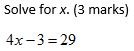
.
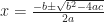 . Nifty, isn’t it? Sorry if I scared you.
 into a lexicon that likely does not have it established that way.
 for
for  into the formula
  causes the volume to increase by a factor of 8. In a test designed to determine if Sally can do these things, her performance was dismal. Her mark on that test was a 58%. The class average was 85%. When the teacher returned the test, she made comments like “Well, I know that I taught about exterior angles, but it is clear that some of you did not learn it.” When Sally brought the test home to show her parents (who, incidentally, knew that Sally had the test coming up, hired a tutor to help her prepare, and then asked if she had gotten it back each day after school starting the day after it had been written until the day a week later when it was returned), her parents were frustrated and disappointed. Sally has been conditioned to believe that her ability to understand direct and partial variation is critical. Because it is mandatory, her inability to care or comprehend is forcibly highlighted. And subsequently, her performance is recorded for posterity on her report card. Sally’s final grade in math ends up being 61%. Her parents are disappointed. Sally is devastated. She believes there is something fundamentally wrong with her, because she legitimately can not measure up to the standards set in a system she has no choice but to be engaged in.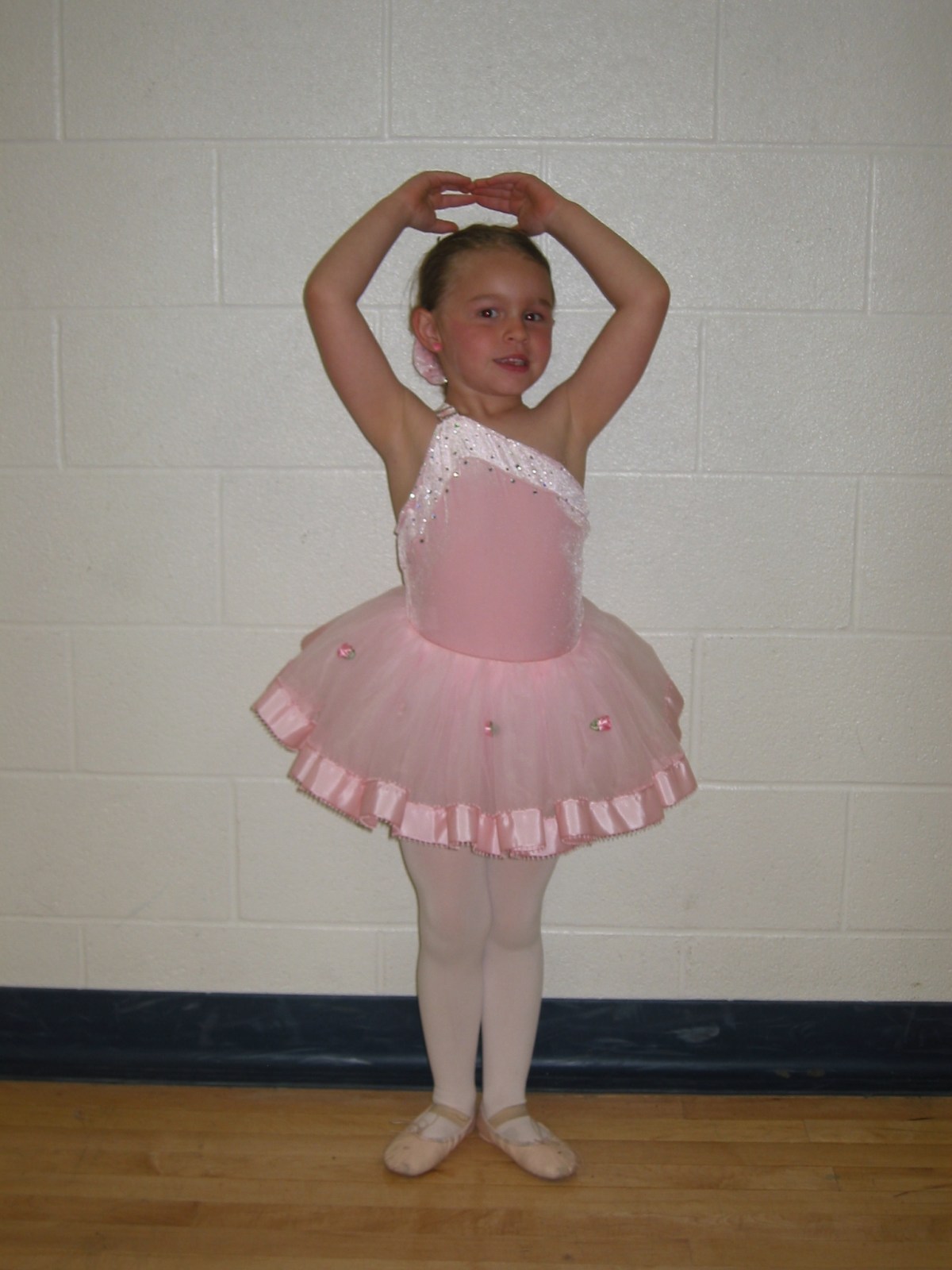
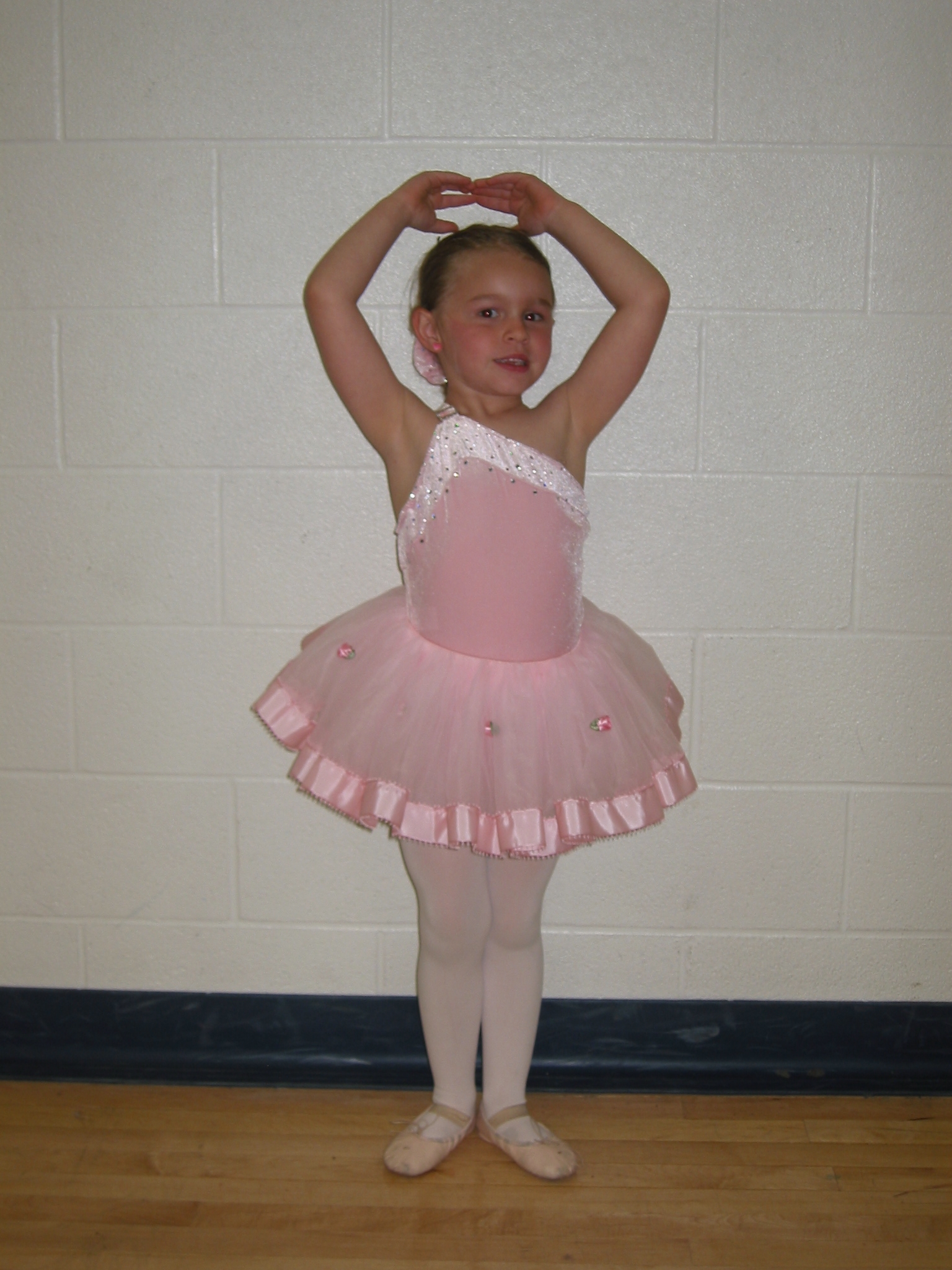
 Starting around the age of 8 or 9, and lasting for 3-4 years, it starts to become obvious which of the girls are well suited to dance and which are not. This obviousness is not lost on the girls. Dance becomes a micro-society where “Haves” and “Have-Nots” start to identify, and the behaviours that result are what you would expect. In a way it mirrors what is happening at that age in school, but from where I sat it was definitely magnified at dance. These can be pretty difficult years for the girls, and perhaps more so for the parents. As I watched from the sidelines, I always told myself that whether a Have or a Have-Not, there are very valuable lessons to be learned from these dramas, and whether my daughter was receiving or giving grief (it certainly seemed she was receiving a lot more than giving, but nobody ever accused a dad of being impartial), my wife and I always did our best to ground her in reality and look for the long-term life lessons that could be taken. I do think, subjectivity aside, that I can safely say my daughter began to show real talent for dance during this time. I can also say, objectively this time, that she emerged from this phase with an inner-strength and confidence that is astounding. As I watch her navigate the social quagmire of the tenth grade, I am exceedingly proud and awed at how well she manages to stay true to herself and her friends, while gliding above the drama that can consume most kids of that age. She never judges others, and always stays honest in helping her friends deal with whatever the current issue is. In and out of the dance world I have watched her handle victories with honest grace and compassion, and failures with resolute determination. She’s my hero, and I firmly believe we have the “emerging talent” years of the competitive dance program to thank for that.
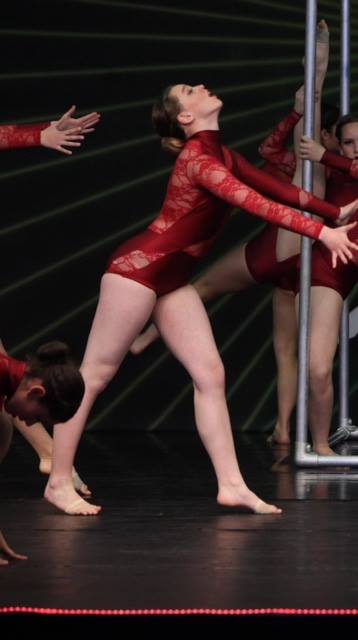 watching So You Think You Can Dance since season 2. It’s a great show to be sure, but I admit at first I was too absorbed in marveling at the physicality of it to understand what it communicates, despite the fact that the judges on the show really do a great job emphasizing this (I always assumed they were saying it metaphorically). But like a child that learns to speak simply from hearing the spoken word and contextually absorbing meaning from the sound, I began to absorb meaning from the movement. The first thing I realized was that unlike languages that use words, dance doesn’t translate to any other language, and communicates things which can’t be communicated any other way, with the possible exceptions of fine art, or poetry. Really good fine art will enthrall and speak to the viewer through infinite contemplation of something static. Really good poetry succeeds at using words which individually can be quite linear, by combining them in a way to create depth and consequently say something the language the poem is written in was not necessarily designed to say. Really good dance? A different thing entirely. It speaks to our humanity on multiple levels, and the fluidity of it allows the choreographer/dancer to tell us stories no written word could approach.
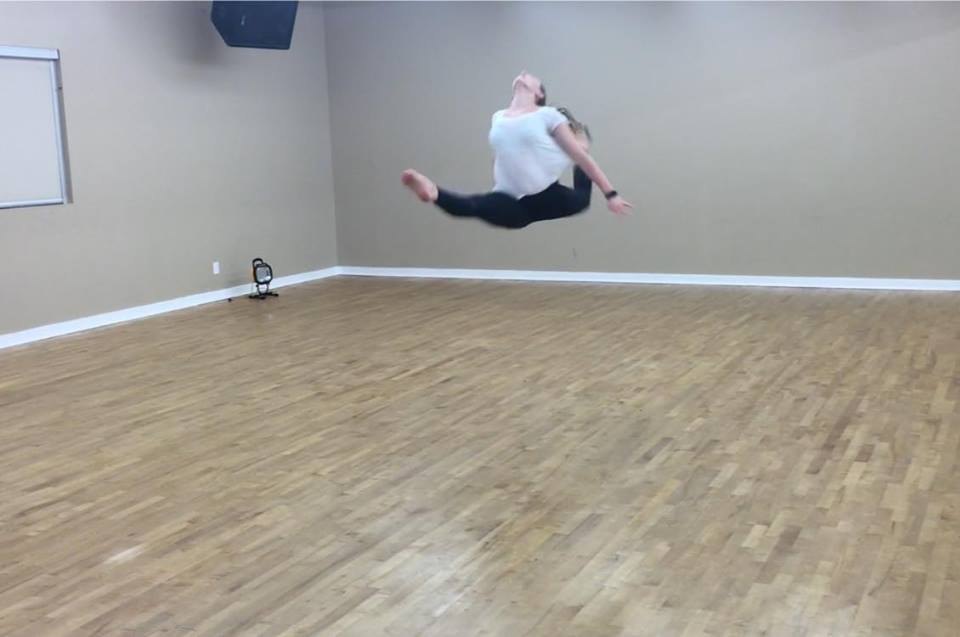 remember once at a dance recital there was a senior acro small group number about to start (see what I did there – Dance Dad knows the terminology). It was clear from the opening positions that one of the dancers was going to execute a crazy trick to start the dance. Before the music started there were hoots and hollers from the wings and from the audience, and one dancer’s voice from the wings rang out with “You GO girl!”. I was momentarily taken aback. I think maybe I had just read an article or watched a show where that phrase was called into question as demeaning to women. And then I looked around. The stage and venue was dense with strong, confident young women, certain of themselves and certain of their power. And the dancer who called it out numbered among them. I couldn’t see anything demeaning at that point about what she had said, but on a deeper level I realized just what dance had done for these kids. It showed them what inner strength, determination and dedication could do. And so naturally I began to think about the dancers I’ve taught in my math classroom and I had this moment of revelation. It is exactly that quality that has always made them stand out to me in that setting. Not that they all excel in math, because not all kids do. But that regardless of their abilities in math, there is always an inner strength and peace that says “I know who I am, I know what I can do, and I know how to commit to improving.” Where many students in high school still need the explicit motivation that our culture seems to thrive on too often, the dancers have internalized their motivation in the best way. I can’t say enough how important that is for success in life.
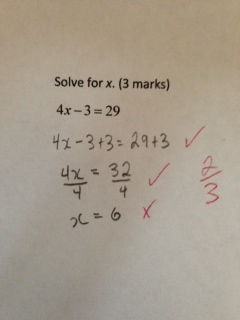

 Experience Has Made Me Rich