On the first two nights of Passover (or just the first night in Israel) Jewish people gather for a ceremonial dinner called a Seder, where the story of Exodus is retold. The centerpiece of the Seder table is a special plate, on which is placed six symbolic foods, each meant to represent an aspect of the Jewish people’s suffering as slaves in Egypt, and the way they gained their freedom. One of the items on the plate is an egg, and oddly, the egg is not a formal part of the dinner, so the symbolism of it is not directly addressed as part of the stages of the Seder. As a child, I always wondered what the egg was about, and asked a teacher of mine about it. Even though I learned later that his answer is not the official explanation, it resonated with me.
What he said is that the egg is not like other foods. When you heat an egg, it gets harder, and stronger. He said that this represents the Jewish people who were slaves in Egypt. I see now that his explanation was a variation of the saying “The same boiling water than softens the potato hardens the egg.” Pharaoh thought to soften the potato by working the Jewish slaves harder, and subjecting them to increasingly more cruel and harsh conditions. It didn’t soften them though. Like the egg, it made them stronger.
Another fixture on the Seder table is a bowl of saltwater, and in many families the egg is dipped in it prior to eating. The saltwater symbolism is pretty direct, representing tears. The symbolism, my teacher explained, is that the oppression-hardened egg is not the final lesson. Enduring slavery and Pharaoh’s hell would not be anyone’s choice as a way to become strong. Under the weight of this misery, the tears of suffering are the salt that layers over all aspects of life.
The metaphor applies just as well today as it did in biblical times. It has been said that many in the world apply impossible standards to the modern state of Israel, and that this is by design. It’s meant to trap Israel into an unwinnable game with eradication as the price of losing, said eradication being the clearly stated endgame of those who have opposed her existence since the beginning. It’s not hard to see the parallel to Pharaoh’s strategy here. Apply increasing pressure on Israel – pressure not applied to any other country – and eventually, she must break. We are seeing it in real time, right now.
As a consequence, by extension this increasingly impossible standard is then applied to all Jewish people across the globe. All 0.2% of us. This is not a new phenomenon. Jewish people have been subjected to impossible standards for thousands of years. With respect to anti-Jewish sentiment, the current situation in the middle east is the latest excuse. But what the people who do this don’t understand is the actual impact that has on people who are born Jewish. They don’t understand why that forces us to excel, which must certainly be maddening to those that wish to see Jewish people suffer. Before I explain my thoughts on why this happens, I want to make clear that I don’t think it’s Judaism as religion that does this, per se, although it is difficult to measure and potentially unweave from Jewish culture the effects of being held to impossible standards over millennia. Rather this drive to excel is the effect on a group of human beings born into a world that continually ups the ante on what will be tolerated. A world that from the outset seems to never afford them the same tolerance for humanity afforded to others. For context, let me give you some personal background.
I have been a high school math teacher for almost 25 years, with the exception of two years I spent on secondment, lecturing mathematics at The University of Waterloo. At the start of my career I worked in three different public schools in in the Greater Toronto Area, in neighborhoods with very different demographics from each other. Then I transitioned to teaching at a Jewish high school. As part of my ongoing work with Waterloo, I also have had the pleasure of working with thousands of students across Canada, as well as internationally in India, Singapore, Malaysia, China, and Ghana. These days I do a great deal of tutoring and mentoring, so I have the opportunity to work one-on-one with hundreds of high school and university students. As a result of these experiences, I’ve encountered students from a wide spectrum of countries, cultures, races, religions, and financial backgrounds. And there is one comforting and beautiful lesson I’ve learned:
Teenagers are fundamentally awesome people.
Despite cultural, geopolitical, and socioeconomic differences, the brilliance, goofiness, and awkwardness is universal. So too are occasional bouts of acting like an idiot. And the ability to be able to turn these characteristics on and off when the situation really warrants it is also universal. They’re ultra cool adults-in-training who still have the little kid in them but are learning how to manifest the grown-ups they will become. All while learning about and exercising their inevitable independence from older generations. They score huge victories. They make huge mistakes. If the child is the raw material, then the adolescent is the forge from which the ultimate adult emerges, tempered into that special alloy of perfection and flaws that we experienced adults all know we are. Witnessing this blossoming is an honour, and is what makes me so grateful to be an educator. For a teacher, students are like your kids, and when I witness them just being teens, I feel legitimate happiness. Even when they’re acting like idiots.
Take for example, school excursions like field trips and sporting events. Any teacher will tell you what a mixed blessing it is to supervise these, especially overnight trips. Those overnighters! There’s nothing quite as stressful as being responsible for dozens or even hundred of other people’s children out in the wild. Responsible for their safety, and also for their behaviour. The blessing is to be there to watch them experience and interact with the world outside the classroom. You see them behave respectfully to strangers. You see their curiosity. You see their enjoyment of each other. You also sometimes see them act like fools, and these are the times when you have to intervene. I have supervised more excursions than I can count, and many of them were multi-day trips to a different country. It’s stressful, but it is incredibly worth it.
So when I prepare a group of teens for an excursion I always tell them that I want them to have the best experience. I tell them how much I love that I get to be a part of it. And I make sure they understand the behaviours we expect, even while knowing that they often have slightly different plans of their own. But when I’m preparing a group of Jewish students, my presentation always has an extra request:
Hold yourselves to a higher standard.
See, if a stranger sees a large group of teens outside of school, they often have certain ideas about what they can expect, and some of that is negative. For example, if a large group of teens was eating lunch in a public space, and left a lot of litter, many people would disgustedly react with a thought more or less like damn teenagers – don’t their parents teach them to pick up after themselves? If the teens are being overly boisterous, you will often see strangers shaking their heads or looking at them angrily. In these situations, you will even sometimes see strangers intervene and try to modify the behaviour. Hopefully it doesn’t get to that stage, and as a chaperone you always do your best to make sure you are the one intervening, but people will be people. This is all normal.
It all changes though, if the group of teens is identifiably Jewish, say, because the boys are wearing kippot (aka yarmulkes or skullcaps). When it’s Jewish kids, the perception is no longer that it’s a group of annoying teenagers. It’s now a group of annoying Jews. The mutterings change from damn teenagers to damn Jews. Their Jewishness trumps their adolescence as the attributable factor for their unwelcome – albeit normal – behaviour. It’s not fair, but it is true.
That’s why I always tell my Jewish students that they must hold themselves to a higher standard. Not because of me, or because of arbitrary rules, and certainly not because it’s fair, but because whether they like it or not, they are ambassadors for all Jewish people. So be extra respectful, extra courteous, and keep that adult switch flicked to the on position. Because the world might cut you some slack knowing that you’re a teenager, but that slack gets gathered right up if you’re a Jewish teenager. And you know what? The kids always do it. They do hold themselves to a higher standard. We inevitably get comments from bus drivers, tour guides, other coaches, and even just regular people interacting with the group that the kids are so polite and respectful, and so nice to deal with – much more so than most groups of teens. This ability to live up to impossibly high standards has nothing to do with being Jewish, but the need to tap into that ability – and thus discover that you can – has everything to do with it.
Being judged more harshly than other teens because you’re Jewish isn’t fair. It’s not a choice anyone would make or a preferred strategy to learn how to rise above. It’s just reality. The reality that says to the sports teams from Jewish high schools that when you are playing at non-Jewish schools, kids will throw pennies at you. And if one of your basketball players commits a foul, the spectators will shout about dirty jews and their dirty play, so keep the fouls to the barest minimum. It’s an impossible standard.
The lesson in this runs deep and lasts a lifetime. First, it teaches the kids that they have the inherent power to be better – better than they even need to be. It teaches them that to be Jewish often means not giving bigotry and hatred an excuse, even and especially when that means behaving better than others. It teaches them that as much as we might wish otherwise, the world is not a fair place, and never will be, so play the hand you’ve been dealt instead of the one you wish you had. It teaches them that the best way to fight antisemitism is to act with honour, grace, and excellence. It also teaches them that you can let down that guard and be “normal”, but only when you’re amongst your own, and that breeds a strong sense of community. Ultimately, this lesson remains with the kids as they grow in to adults. They learn that they have the power to hold themselves to impossibly high standards. They achieve greatness as a result.
It’s ironic really. That impossible standards can make you impossibly great. But there it is.
Thanks for reading,
Rich





 Ok. I know that’s been borrowed from AA protocol countless times. Often in jest when not in the context of an actual meeting. But I’m not joking – I am an addict. I have had a few addictions in my life, thankfully not any of the big nasty ones like alcohol or drugs, but some of the ones I’ve had have had negative impact, for certain. The two most prominent are food and smartphones.
 Humility aside, my concentration and focus used to be legendary. I could get lost in a process, with intense focus for hours on end. So much so that I would forget to eat or even go to the washroom, until the need for one or both of those became impossible to ignore and I would look at the clock and be shocked at the time. And the things I could do during that time were amazing. It’s how I got through my Masters degree with a GPA of 97%, for example (that and major support from my awesome wife and kids). Lately, my concentration sucks. I find myself looking for distraction only minutes after beginning something. At first, when I noticed this, I blamed my age. It’s no secret that aging can have an impact on brain function. But the truth is I am 48, and there are plenty of people older – even much older – than me who can concentrate on a task for a long period of time with no trouble. On a smartphone, nothing needs concentration, and everything is provided in quick bites. You flit from item to item like a politician moving through a political rally, shaking hands with everyone and meeting nobody. And you can tell yourself that this is behaviour limited to your phone time, but what you miss is that your brain is a learning machine, and it’s learning a behaviour. Your brain wires itself to adapt to your environment, even if that environment is the manufactured barrage of inanity you kill time with on your phone.

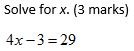
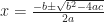 . Nifty, isn’t it? Sorry if I scared you.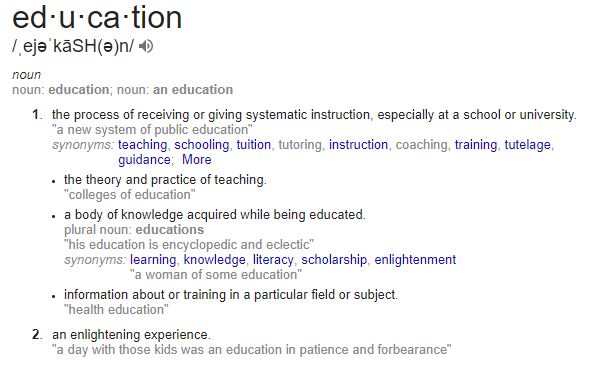
 into a lexicon that likely does not have it established that way.
 for
for  into the formula
  causes the volume to increase by a factor of 8. In a test designed to determine if Sally can do these things, her performance was dismal. Her mark on that test was a 58%. The class average was 85%. When the teacher returned the test, she made comments like “Well, I know that I taught about exterior angles, but it is clear that some of you did not learn it.” When Sally brought the test home to show her parents (who, incidentally, knew that Sally had the test coming up, hired a tutor to help her prepare, and then asked if she had gotten it back each day after school starting the day after it had been written until the day a week later when it was returned), her parents were frustrated and disappointed. Sally has been conditioned to believe that her ability to understand direct and partial variation is critical. Because it is mandatory, her inability to care or comprehend is forcibly highlighted. And subsequently, her performance is recorded for posterity on her report card. Sally’s final grade in math ends up being 61%. Her parents are disappointed. Sally is devastated. She believes there is something fundamentally wrong with her, because she legitimately can not measure up to the standards set in a system she has no choice but to be engaged in.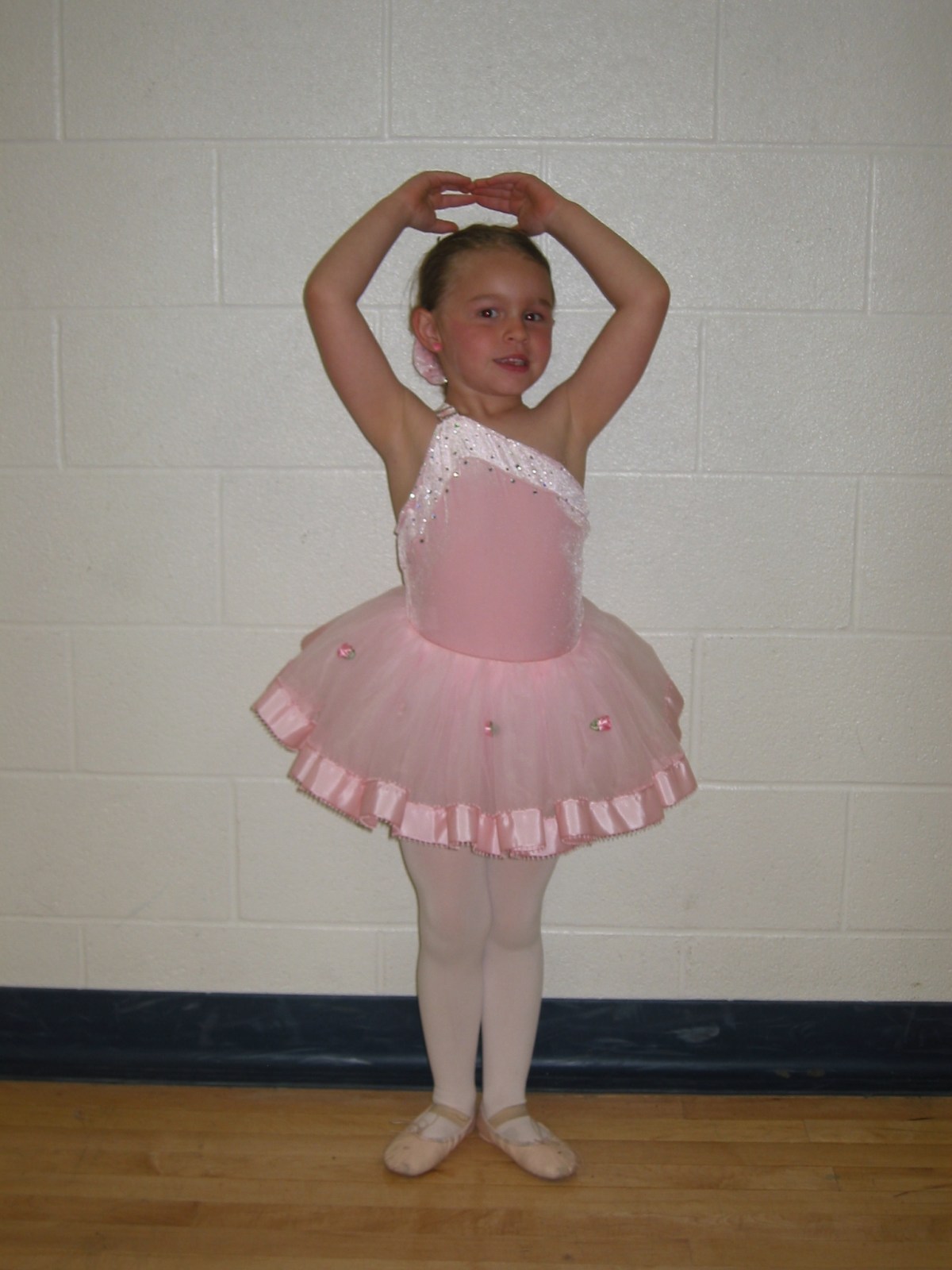
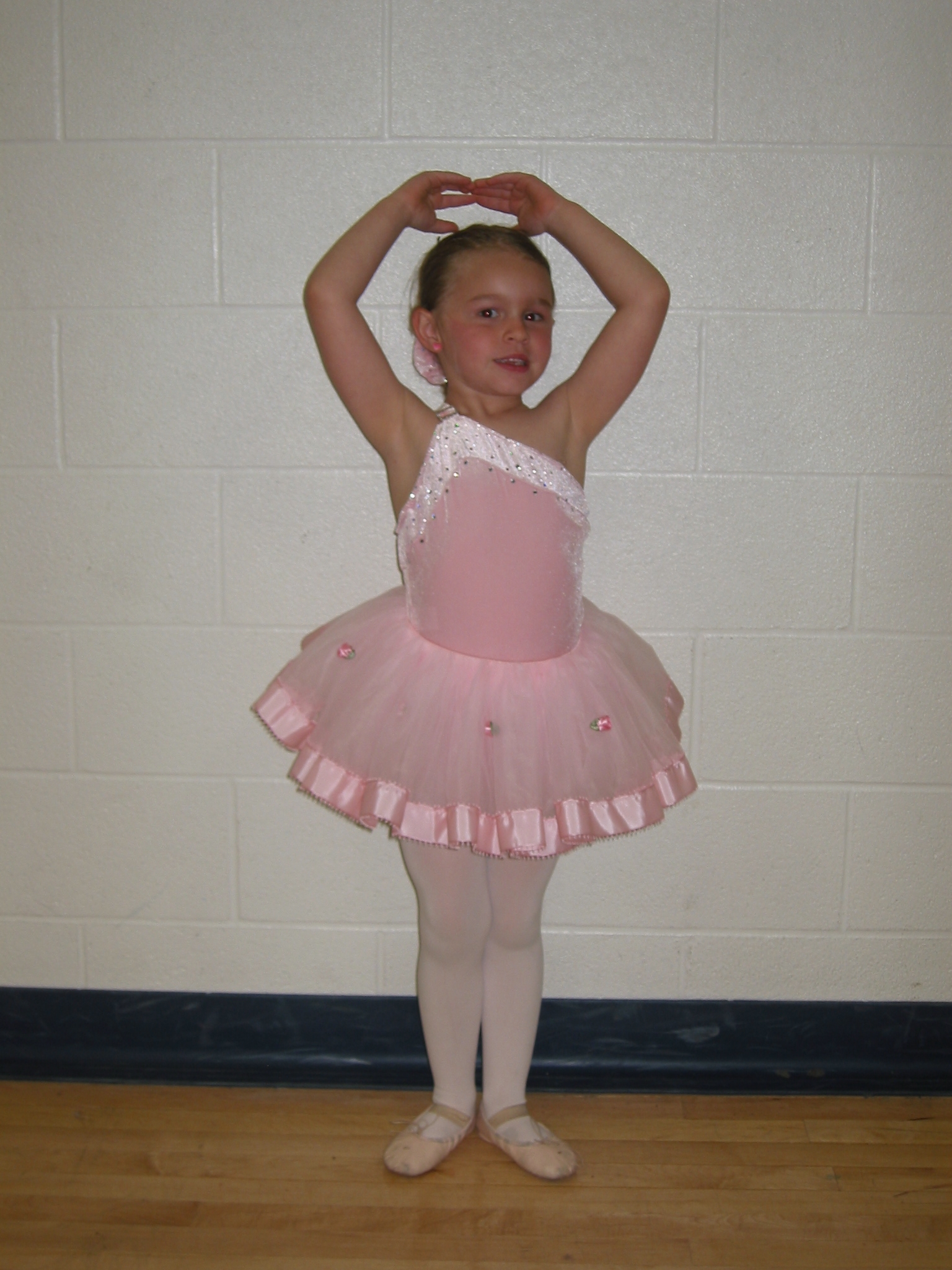
 Starting around the age of 8 or 9, and lasting for 3-4 years, it starts to become obvious which of the girls are well suited to dance and which are not. This obviousness is not lost on the girls. Dance becomes a micro-society where “Haves” and “Have-Nots” start to identify, and the behaviours that result are what you would expect. In a way it mirrors what is happening at that age in school, but from where I sat it was definitely magnified at dance. These can be pretty difficult years for the girls, and perhaps more so for the parents. As I watched from the sidelines, I always told myself that whether a Have or a Have-Not, there are very valuable lessons to be learned from these dramas, and whether my daughter was receiving or giving grief (it certainly seemed she was receiving a lot more than giving, but nobody ever accused a dad of being impartial), my wife and I always did our best to ground her in reality and look for the long-term life lessons that could be taken. I do think, subjectivity aside, that I can safely say my daughter began to show real talent for dance during this time. I can also say, objectively this time, that she emerged from this phase with an inner-strength and confidence that is astounding. As I watch her navigate the social quagmire of the tenth grade, I am exceedingly proud and awed at how well she manages to stay true to herself and her friends, while gliding above the drama that can consume most kids of that age. She never judges others, and always stays honest in helping her friends deal with whatever the current issue is. In and out of the dance world I have watched her handle victories with honest grace and compassion, and failures with resolute determination. She’s my hero, and I firmly believe we have the “emerging talent” years of the competitive dance program to thank for that.
 watching So You Think You Can Dance since season 2. It’s a great show to be sure, but I admit at first I was too absorbed in marveling at the physicality of it to understand what it communicates, despite the fact that the judges on the show really do a great job emphasizing this (I always assumed they were saying it metaphorically). But like a child that learns to speak simply from hearing the spoken word and contextually absorbing meaning from the sound, I began to absorb meaning from the movement. The first thing I realized was that unlike languages that use words, dance doesn’t translate to any other language, and communicates things which can’t be communicated any other way, with the possible exceptions of fine art, or poetry. Really good fine art will enthrall and speak to the viewer through infinite contemplation of something static. Really good poetry succeeds at using words which individually can be quite linear, by combining them in a way to create depth and consequently say something the language the poem is written in was not necessarily designed to say. Really good dance? A different thing entirely. It speaks to our humanity on multiple levels, and the fluidity of it allows the choreographer/dancer to tell us stories no written word could approach.
 remember once at a dance recital there was a senior acro small group number about to start (see what I did there – Dance Dad knows the terminology). It was clear from the opening positions that one of the dancers was going to execute a crazy trick to start the dance. Before the music started there were hoots and hollers from the wings and from the audience, and one dancer’s voice from the wings rang out with “You GO girl!”. I was momentarily taken aback. I think maybe I had just read an article or watched a show where that phrase was called into question as demeaning to women. And then I looked around. The stage and venue was dense with strong, confident young women, certain of themselves and certain of their power. And the dancer who called it out numbered among them. I couldn’t see anything demeaning at that point about what she had said, but on a deeper level I realized just what dance had done for these kids. It showed them what inner strength, determination and dedication could do. And so naturally I began to think about the dancers I’ve taught in my math classroom and I had this moment of revelation. It is exactly that quality that has always made them stand out to me in that setting. Not that they all excel in math, because not all kids do. But that regardless of their abilities in math, there is always an inner strength and peace that says “I know who I am, I know what I can do, and I know how to commit to improving.” Where many students in high school still need the explicit motivation that our culture seems to thrive on too often, the dancers have internalized their motivation in the best way. I can’t say enough how important that is for success in life.
 Experience Has Made Me Rich