Hi. My name is Rich and I am an addict.
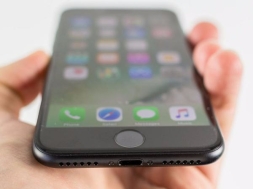 Ok. I know that’s been borrowed from AA protocol countless times. Often in jest when not in the context of an actual meeting. But I’m not joking – I am an addict. I have had a few addictions in my life, thankfully not any of the big nasty ones like alcohol or drugs, but some of the ones I’ve had have had negative impact, for certain. The two most prominent are food and smartphones.
I am going to talk a little about the food addiction later in this article. But I mainly want to talk about the subtle and not-so-subtle evils that my phone addiction has wrought. The first is an obvious one, and it has been discussed to death. Still, it needs addressing:
Phone Addiction Steals You From The World
There are way too many times I have belatedly realized that my son, daughter, wife or close friend made an attempt to communicate with me while I was using my phone. And after they realize it’s like talking to a projection, they give up. The worst part is they seem to just accept it – that they are not going to win my attention over whatever clever post I am reading or writing, or whatever video about people hurting themselves doing stupid things I am watching, or whatever likes I am counting. What’s worse is that so many of those times they were the ones who had my attention first, but during a brief lull in our interaction I pulled out my phone to investigate a notification and was subsequently checked out. Most heart-wrenching is that it is out of respect for me that they give up and don’t try to interrupt my phone time. Clearly I don’t need to go further on the evil of this aspect. The next few are a little more subtle, but insidious.
Smartphone Addiction Erodes Your Ability to Focus
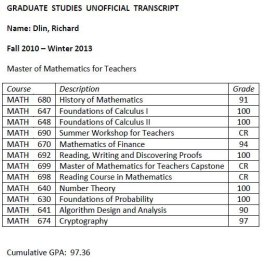 Humility aside, my concentration and focus used to be legendary. I could get lost in a process, with intense focus for hours on end. So much so that I would forget to eat or even go to the washroom, until the need for one or both of those became impossible to ignore and I would look at the clock and be shocked at the time. And the things I could do during that time were amazing. It’s how I got through my Masters degree with a GPA of 97%, for example (that and major support from my awesome wife and kids). Lately, my concentration sucks. I find myself looking for distraction only minutes after beginning something. At first, when I noticed this, I blamed my age. It’s no secret that aging can have an impact on brain function. But the truth is I am 48, and there are plenty of people older – even much older – than me who can concentrate on a task for a long period of time with no trouble. On a smartphone, nothing needs concentration, and everything is provided in quick bites. You flit from item to item like a politician moving through a political rally, shaking hands with everyone and meeting nobody. And you can tell yourself that this is behaviour limited to your phone time, but what you miss is that your brain is a learning machine, and it’s learning a behaviour. Your brain wires itself to adapt to your environment, even if that environment is the manufactured barrage of inanity you kill time with on your phone.
Possibly worse, is that we tell ourselves that the phone is a harmless distraction, and we use it at the weirdest times. I’ve used it while watching TV, thinking that surely the TV doesn’t care so no harm done. But while the TV doesn’t care, my brain does. Watching a television show requires focus. Not the same level as calculus mind you – but focus nonetheless. There’s a story unfolding and if you miss something the subsequent bits make less sense. So you are missing an opportunity to focus. To practice what I tell my students is the single most lacking skill in the computer generation: uni-tasking. I have heard many a person brag about their ability to multi-task, which is great, I guess. But smartphones have stolen our ability to focus on one thing for a long time. We can no longer effectively uni-task.
Smartphone Addiction Encourages Mistakes
Yeah, this one took me a while to clue into. I’ve noticed over the past couple of years that I am making more mistakes at things that I should be able to do automatically. Frighteningly, I don’t even notice them when I make them – only once they are pointed out, or long after, do I notice. And when I do notice I have no memory of making the mistake.
Now I hear you say Wait! That’s just a symptom of aging!
Well, yes. It could be. But the thing is, there is a thought groove I find myself in when these things happen – like a road I know I’ve been on because the landmarks are familiar but I can’t quite place it. Then it hit me. Autocorrect. Autocorrect and predictive text. Both of these so-called innovations have made it so that we don’t even have to concentrate on the simple act of typing a text, email, or post. Just type close to what you want and autocorrect will fix it for you. Not always correctly, mind you, but often. So much so that when it gets it wrong we don’t even notice until later, making for some humorous/embarrassing messages getting sent. I actually hated this feature, and turned off autocorrect some time ago, but I kept the predictive text on. And it works so well that I often only have to type the first 1-3 letters of what I want and an entire phrase is suggested to me – correctly. So I select it and don’t check it. And sometimes, my iPhone does the old bait-and-switch on me so that the thing I think I’m selecting changes to something else just before I select it, and I don’t even notice and the wrong thing gets sent.
Like I said before, the brain is a learning machine. And my smartphone addiction has taught my brain that you only have to start a thought to have it completed automatically. And that is what has manifested into these increasingly frequent mistakes. It is NOT age. I can feel it when it happens. It is the same thought groove as typing on my phone.
At Least I Remember When It Wasn’t So
The scariest thought to me is that these things I describe are changes. As in, it wasn’t always so for me. I am actually frightened about the generations that don’t have a comparison to make to a different time. A generation that believes that being able to concentrate on one thing for a long time is an unusual, maybe even useless skill. Or that being able catch every joke in a sitcom is a freakish ability. Or that being able to spell a word correctly on purpose is a worthwhile ability. With respect to the issues I have outlined, I want to go back to the way I was. But for many younger people, this is the way they have always been. There is nothing to go back to.
Quitting May Not Be the Answer
So the fix would seem obvious, wouldn’t it? Just stop. But that’s not realistic, or even really desirable. Many good things come from my smartphone. I have made friends – good friends – who live in different countries from me, and I stay in touch with them using my phone. There are legitimately useful apps, like the medication reminder, the shared grocery list. Or the math puzzle game Euclidea that actually reverses some of the deleterious concentration effects I described above. I use GPS apps all the time and get lost much less often (though sadly, I still manage to get lost sometimes). I listen to so much more music variety than I did in the days when you had to buy records, tapes or CD’s, and it is so much more easy to discover new music now than then. I take a lot of photos with my phone, and some of those are real treasures that I wouldn’t otherwise have. I read some great articles, and have learned a ton of cool things. Chances are super-high you are reading this on a smartphone. I believe these are good things. So I don’t want to quit. And I don’t think anyone has to. We live in a pretty plugged in world, and more and more there are things that are designed to be done on our devices that are actually difficult if not impossible to do otherwise. So modified usage is the key.
Modification Requires Discipline
Or does it? I mean, yeah, it does. Almost always. If you want to modify a behaviour it means breaking a habit, and that is not trivial. You need to be disciplined. And you need to believe that you can do it. Which I think, for many people, is the main obstacle to success. That belief that you can do it. Which leads me to my food addiction:
How I Modified My Eating Behaviour
The first addiction in my life I had to acknowledge was food. Maybe I was genetically doomed to that, or maybe it was my upbringing, but my addiction to food is real either way. It resulted in a max weight of 250 lbs, and an adulthood of gaining-losing-gaining, until my heart attack 3 years ago. The heart attack was actually not caused by my eating, or so the cardiologist says, but rather genetics. My arteries are shaped in a more clog-worthy way than you’d set out to do if you were designing a human from scratch. However there’s no argument that my food addiction wasn’t helping. The heart attack added a new tool to my psyche though – something that’s simultaneously heard and easy to describe: a hard stop. Before the heart attack meals were a negotiation in my head. And I often didn’t come out the winner in the bargain. Now there is no negotiation. I eat clean, all the time. I don’t overeat. I actually can have just one french fry. Truly! French fries are a food I will not allow myself to order or prepare anymore, but on occasion I have had just one from someone else’s meal – even though they were finished and offered me the rest. Just one, for the taste, and I have no desire to eat another. Cardio is now a non-negotiable habit as well. I don’t negotiate whether or not I will do it. I just do.
I am as fit as I’ve ever been and certainly as healthy as I’ve ever been. People often ask me how I did it and I sadly tell them that I wish I could give them the secret, but the secret is I had a heart attack and I don’t want another one.


The picture on the left features my beautiful niece at her first birthday. You may be distracted by her cuteness – I understand. Take your time. But when you are ready, the place to look is my belly protruding under my forearm. The picture on the right is a fun shot I took after a workout a couple of weeks ago. Oh, and by the way – both those photos were taken with my phone.
So. I have managed to find a way to live a healthy life despite a food addiction, even if the way I found was not something I’d wish on anyone. But after all, isn’t it all in my head? This new tool I called the hard stop?
Of course it is. And because it is I believe I can apply that rationale to my phone addiction. I have started to, and will continue to do so.
What I Am Doing to Fix it
I turned off all the features of my phone that try to think for me. Any typos or wrong words I send now are all mine. And there are so much fewer of them now! It takes me longer to compose a message. But it’s worth it.
I will not look at my phone while watching TV. Not even during commercials. Because you can’t force yourself to stop the moment the commercial is over.
If I am in the middle of a legitimate text conversation with someone, I make sure the people in the room with me know it, so they know why I am checked out. And when it is done, I tell them explicitly that I am done and I put my phone away so that they can have my distraction-free attention.
When I sit down to do focus-heavy tasks, like work or drawing, I put my brain in do-not-disturb mode, meaning I don’t check notifications at all, and my phone becomes a music player exclusively. When I do this, I let anyone know who would normally feel like they have 24/7 access to me that I have gone dark. This way if they need to communicate with me they know they need to either do it in person or call. Because as we all know, nobody ever uses their smartphone as a telephone, so when there is an actual call I know I should check to see who it is and probably answer.
It Can Be Done
As they say, no need to throw the baby out with the bath water. You don’t have to quit if you can properly modify. And you can. I believe you don’t need a critical moment to be the catalyst. Just the knowledge that you can do it. And I really, really believe we need to.
I’d love to hear your thoughts and experiences on smartphone addiction, and how it can be addressed. Feel free to share in the comments section.
Thanks for reading,
Rich
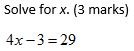
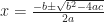 . Nifty, isn’t it? Sorry if I scared you.
 into a lexicon that likely does not have it established that way.
 for
for  into the formula
  causes the volume to increase by a factor of 8. In a test designed to determine if Sally can do these things, her performance was dismal. Her mark on that test was a 58%. The class average was 85%. When the teacher returned the test, she made comments like “Well, I know that I taught about exterior angles, but it is clear that some of you did not learn it.” When Sally brought the test home to show her parents (who, incidentally, knew that Sally had the test coming up, hired a tutor to help her prepare, and then asked if she had gotten it back each day after school starting the day after it had been written until the day a week later when it was returned), her parents were frustrated and disappointed. Sally has been conditioned to believe that her ability to understand direct and partial variation is critical. Because it is mandatory, her inability to care or comprehend is forcibly highlighted. And subsequently, her performance is recorded for posterity on her report card. Sally’s final grade in math ends up being 61%. Her parents are disappointed. Sally is devastated. She believes there is something fundamentally wrong with her, because she legitimately can not measure up to the standards set in a system she has no choice but to be engaged in.

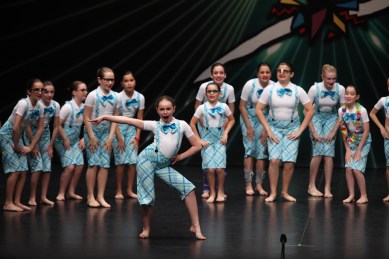 Starting around the age of 8 or 9, and lasting for 3-4 years, it starts to become obvious which of the girls are well suited to dance and which are not. This obviousness is not lost on the girls. Dance becomes a micro-society where “Haves” and “Have-Nots” start to identify, and the behaviours that result are what you would expect. In a way it mirrors what is happening at that age in school, but from where I sat it was definitely magnified at dance. These can be pretty difficult years for the girls, and perhaps more so for the parents. As I watched from the sidelines, I always told myself that whether a Have or a Have-Not, there are very valuable lessons to be learned from these dramas, and whether my daughter was receiving or giving grief (it certainly seemed she was receiving a lot more than giving, but nobody ever accused a dad of being impartial), my wife and I always did our best to ground her in reality and look for the long-term life lessons that could be taken. I do think, subjectivity aside, that I can safely say my daughter began to show real talent for dance during this time. I can also say, objectively this time, that she emerged from this phase with an inner-strength and confidence that is astounding. As I watch her navigate the social quagmire of the tenth grade, I am exceedingly proud and awed at how well she manages to stay true to herself and her friends, while gliding above the drama that can consume most kids of that age. She never judges others, and always stays honest in helping her friends deal with whatever the current issue is. In and out of the dance world I have watched her handle victories with honest grace and compassion, and failures with resolute determination. She’s my hero, and I firmly believe we have the “emerging talent” years of the competitive dance program to thank for that.
 watching So You Think You Can Dance since season 2. It’s a great show to be sure, but I admit at first I was too absorbed in marveling at the physicality of it to understand what it communicates, despite the fact that the judges on the show really do a great job emphasizing this (I always assumed they were saying it metaphorically). But like a child that learns to speak simply from hearing the spoken word and contextually absorbing meaning from the sound, I began to absorb meaning from the movement. The first thing I realized was that unlike languages that use words, dance doesn’t translate to any other language, and communicates things which can’t be communicated any other way, with the possible exceptions of fine art, or poetry. Really good fine art will enthrall and speak to the viewer through infinite contemplation of something static. Really good poetry succeeds at using words which individually can be quite linear, by combining them in a way to create depth and consequently say something the language the poem is written in was not necessarily designed to say. Really good dance? A different thing entirely. It speaks to our humanity on multiple levels, and the fluidity of it allows the choreographer/dancer to tell us stories no written word could approach.
 remember once at a dance recital there was a senior acro small group number about to start (see what I did there – Dance Dad knows the terminology). It was clear from the opening positions that one of the dancers was going to execute a crazy trick to start the dance. Before the music started there were hoots and hollers from the wings and from the audience, and one dancer’s voice from the wings rang out with “You GO girl!”. I was momentarily taken aback. I think maybe I had just read an article or watched a show where that phrase was called into question as demeaning to women. And then I looked around. The stage and venue was dense with strong, confident young women, certain of themselves and certain of their power. And the dancer who called it out numbered among them. I couldn’t see anything demeaning at that point about what she had said, but on a deeper level I realized just what dance had done for these kids. It showed them what inner strength, determination and dedication could do. And so naturally I began to think about the dancers I’ve taught in my math classroom and I had this moment of revelation. It is exactly that quality that has always made them stand out to me in that setting. Not that they all excel in math, because not all kids do. But that regardless of their abilities in math, there is always an inner strength and peace that says “I know who I am, I know what I can do, and I know how to commit to improving.” Where many students in high school still need the explicit motivation that our culture seems to thrive on too often, the dancers have internalized their motivation in the best way. I can’t say enough how important that is for success in life.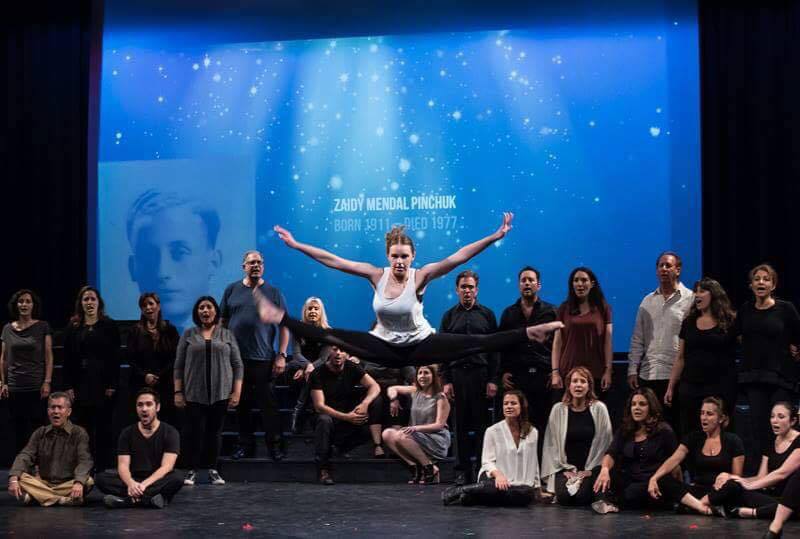








 Experience Has Made Me Rich